
 By
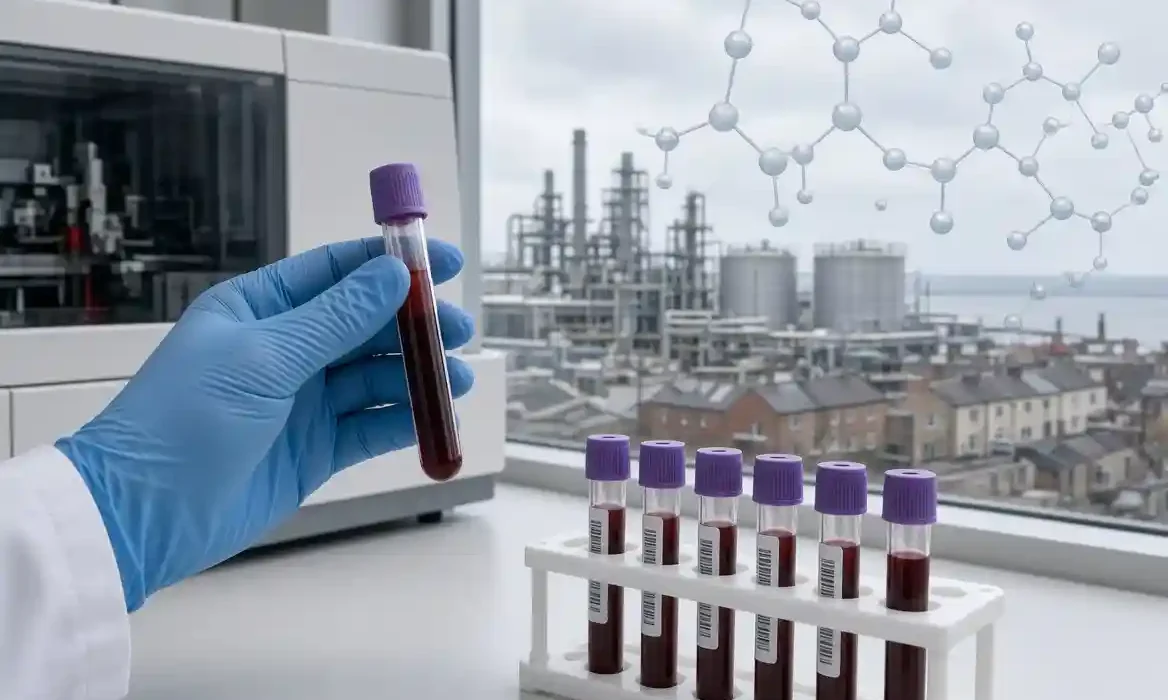
Blood testing commissioned as part of a local investigation has found elevated levels of the chemical PFOA in many of the 49 Thornton-Cleveleys residents who took part. The results were relayed to participants on 23 September 2026 and reported by the law firm Leigh Day on 24 September 2026.
The testing was arranged by Leigh Day with experts led by Dr Dave Megson of Manchester Metropolitan University and took place during summer 2026. According to Leigh Day, 69.4% of participants had PFOA levels above 20 nanograms per millilitre, with an average reported level of 26 ng/ml. None were reported below 2 ng/ml. The findings add to ongoing concerns about PFAS around the Hillhouse chemical manufacturing site, but public-health agencies stress that PFAS blood tests cannot by themselves establish where exposure came from or predict future illness.
What Did the Blood Tests Find?
Leigh Day said 49 residents underwent blood testing. The group was not a random or representative sample of all Thornton-Cleveleys residents, a point that is important for interpreting the results.
Reported findings from the Leigh Day-commissioned testing were:
| Finding reported by Leigh Day | Reported result |
|---|---|
| Residents tested | 49 |
| Average PFOA level | 26 ng/ml |
| PFOA above 20 ng/ml (described using US NASEM framework as higher category) | 69.4% (34 of 49) |
| PFOA between 2 and 20 ng/ml | 30.6% (15 of 49) |
| PFOA below 2 ng/ml | 0 participants |
| Participants within 1km reported to have higher average levels | Higher average than those further away, according to Leigh Day summary |
| Frequent consumers of home-grown fruit and vegetables in higher category | 75% reported in that category |
| Frequent consumers of home-produced eggs in higher category | All reported in that category, according to Leigh Day summary |
The 20 ng/ml and 2 ng/ml thresholds used to describe the results come from the US National Academies of Sciences, Engineering, and Medicine (NASEM) 2022 guidance on PFAS testing, which was applied by the testing project because the UK has no official PFAS blood guidance values. The UK Government notes that different international health-based guidance and biomonitoring values exist and that there are uncertainties in interpreting these levels.
Leigh Day also said that testing detected EEA-NH4, a replacement PFAS used at the site after 2012, in 10 participants. That detail was reported in wider coverage of the results.
Who Was Tested?
According to Leigh Day, participants were selected based on factors including proximity to the Hillhouse site, length of residence and consumption of locally grown produce. This means the group was intentionally weighted toward people with potentially higher exposure opportunities.
Because of that selection method, the percentages cannot be extrapolated to the wider population of Thornton-Cleveleys or Wyre. A targeted group of 49 people chosen for proximity and home-grown food consumption would be expected to show different results than a random sample of several thousand residents. The findings describe this particular tested group, not the community as a whole.
What Are PFAS and PFOA?
PFAS stands for per- and polyfluoroalkyl substances, a large family of thousands of synthetic chemicals. They contain very strong carbon-fluorine bonds, which make many of them highly persistent in the environment. That persistence is why they are often called “forever chemicals,” though not all PFAS behave identically.
PFAS have been widely used since the early 1950s for their oil- and water-repellent properties, in manufacturing processes, firefighting foams, coatings, stain repellents, and in consumer products such as non-stick cookware, waterproof clothing and food packaging. Only a few hundred PFAS have been in significant commercial use, and only a small number show evidence of health and environmental risks, but research is continuing, according to Wyre Council information on PFAS.
PFOA, or perfluorooctanoic acid, is one specific PFAS. It is a persistent organic pollutant subject to restricted use under the Stockholm Convention since 2020. PFOA was used at the Hillhouse site as a processing aid in fluoropolymer manufacturing. It is different from the broader PFAS group, and different PFAS can have different exposure routes and health profiles.
Historical information cited by Leigh Day and by Wyre Council indicates that the Hillhouse site was operated by ICI until 1992 and was later operated by AGC Chemicals Europe, which took over in 1999. PFOA was used at the site from the 1950s until it was phased out in 2012. Leigh Day states that approximately 178 tonnes of PFOA were released since the 1950s, a figure attributed to information provided by AGC to the Environment Agency. Other reporting has cited an estimate of around 145 tonnes based on a 2025 paper in Environmental Science & Technology. These historical release figures are attributed estimates, not direct measurements of current exposure.
Why Are PFAS a Health Concern?
Research into PFAS health effects is ongoing. For PFOA, some of the most studied outcomes include higher cholesterol levels, immune effects such as reduced vaccine response, developmental effects including lower birthweight, reproductive effects, and certain cancers. In November 2023, the International Agency for Research on Cancer classified PFOA as carcinogenic to humans (Group 1) and PFOS as possibly carcinogenic to humans (Group 2B), based on evidence from animal studies and mechanistic evidence. UK Government guidance published in September 2026 reflects that classification.
UK authorities provide important context. The UK Health Security Agency rapid review of health impacts from industrial sources of PFAS, published 22 September 2026, considered 35 international cohort studies from 2005 to 2025. It concluded there is currently inadequate evidence to determine whether long-term PFAS exposure from local industrial or manufacturing sites causes adverse health effects in nearby communities. It noted evidence suggesting an association between PFOS and PFAS mixtures containing PFOS and lower birthweight, but said any measurable effect would be unlikely to be detectable in local communities in England because low and very low birthweight are uncommon. For many other outcomes, including heart disease, diabetes, some cancers, pregnancy outcomes and autoimmune diseases, it found insufficient evidence to determine a link.
Crucially, detecting PFOA in blood does not mean a person has or will develop these conditions. Associations reported in population studies reflect higher exposure levels on average; they do not predict individual illness.
What Can a PFAS Blood Test Actually Tell You?
The current UK public-health position is that PFAS biomonitoring is not routinely recommended for individuals. The Wyre Council Health Cell advice, which brings together Lancashire County Council, UK Health Security Agency and NHS Lancashire and South Cumbria Integrated Care Board, summarises this as follows:
- A PFAS blood test can show that certain PFAS are present in blood and may provide evidence that exposure has occurred.
- It cannot normally identify where the exposure came from, when it happened, or which pathway was responsible.
- It cannot predict whether a particular individual will develop a disease in the future.
- It cannot establish that a nearby factory caused an individual’s result.
- It cannot determine the cause of an existing health condition.
- Exposure can come from multiple sources, including food, drinking water, air, dust and consumer products, and most people in the UK are likely to have measurable levels of some PFAS in their blood because these chemicals are widespread.
The Health Cell also expressed concern that people may have been advised to consider intrusive therapies to reduce PFAS levels, noting that evidence that these interventions improve health outcomes remains uncertain and should not be pursued without specialist clinical oversight.
This is consistent with wider UK Government information on PFAS general information and with statements that PFAS blood testing does not predict future health problems and can sometimes create unnecessary concern.
What Is Happening Around the Thornton-Cleveleys Chemical Site?
The Hillhouse Technology Enterprise Zone in Thornton-Cleveleys has been used for industrial chemical manufacturing for more than a century. The multi-agency investigation was launched in 2024 after the Environment Agency obtained information from AGC about current and historic PFAS use, including emissions to air, land and water, and considered the potential for historic contamination.
Wyre Council, as lead authority for contaminated land under Part 2A of the Environmental Protection Act 1990, asked the Environment Agency to inspect the site and surrounding land. Sampling has been conducted in phases, focusing initially on public land closest to the site where deposition was considered most likely.
According to information collated by Hillhouse Watch and Wyre Council updates, phase 1 soil testing in 2024 found PFOA detected in 187 of 199 samples on council-owned land within about 5km. A later phase in 2025 found PFOA detected in 287 of 291 samples in gardens and open spaces within 500m. These figures indicate presence, not automatic legal contamination.
The investigation also included produce testing. In January 2025, all soil samples at Occupation Road Allotments, located on the boundary of the Hillhouse site, contained PFOA. Environment Agency scientists concluded that the site met the statutory criteria for formal classification as contaminated land, based on potential risks to human health and possible harm to domestically grown produce. Wyre Council announced on 5 March 2026 that Occupation Road Allotments would be temporarily closed, with Sandringham Avenue Allotments closed on a precautionary basis pending further assessment, as detailed in the Wyre Council update on further steps in the multi-agency investigation.
As of the blood-test announcement on 24 September 2026, Wyre Council and Environment Agency updates noted that no formal Part 2A determination had been made for the wider area beyond the specific allotment assessment, and the wider investigation remains ongoing. Officials have said that finding PFOA in soil alone does not automatically mean land is legally contaminated; detailed risk assessment considering land use is required.
What Does the Government Say About PFAS Exposure?
The UK published its first PFAS Plan on 3 February 2026, describing PFAS as one of the most pressing chemical challenges. The plan includes commitments to improve monitoring in soil, water and food, develop guidance for regulators on legacy contamination, consider statutory limits for PFAS in drinking water, and create public information resources.
Current government public-health messaging emphasises that because PFAS are widespread, most people are likely to have some measurable level in blood, that blood testing cannot generally identify source, and that routine individual testing is not recommended. The Food Standards Agency advises general hygiene measures such as washing and peeling home-grown produce to remove soil and dust, an advice that applies everywhere but is particularly relevant where elevated soil levels have been found.
Could the Blood Results Be Linked to the Industrial Site?
Proximity data reported by Leigh Day — higher average levels among those within one kilometre and higher levels among frequent consumers of home-grown produce and eggs — are consistent with concerns about local environmental exposure, but they do not by themselves prove source or causation for any individual.
Soil testing has found elevated PFOA in some samples around Hillhouse, and allotment produce testing has contributed to closures. At the same time, PFOA and other PFAS can come from many sources, and background exposure exists in the general population. A blood test alone cannot separate historic industrial deposition from other contributions such as diet, water, dust or consumer products.
Wyre Council’s health advice specifically addresses this uncertainty: many people are likely to have measurable PFAS, and a test result cannot identify where exposure came from.
What Should Residents Know About Local Food?
Official advice has evolved as soil and produce results have come in. The Food Standards Agency and Wyre Council have advised:
- People living within 1km of the Hillhouse site are advised to wash and peel home-grown fruit and vegetables to remove soil and dust before eating. This is standard advice for all home-grown produce, but removing soil helps reduce exposure to PFAS where soil levels are elevated.
- People who eat large quantities of vegetables on a daily basis from Occupation Road Allotments are likely to be increasing their PFAS exposure, based on limited produce sampling supported by more extensive soil testing. Lower levels of consumption, for example weekly or small amounts, is unlikely to result in significant increase above usual dietary exposures, according to the FSA assessment.
- Residents are advised not to eat home-produced eggs or poultry from within 1km of the Hillhouse site, after testing found elevated levels. This precautionary advice was issued in early 2026 and remains referenced in council updates.
- Residents within 1km may consider using raised beds and fresh soil for growing produce.
- Normal hygiene precautions such as washing hands after gardening or contact with soil remain recommended.
Allotment holders have been provided with specific updates about closures. The advice does not mean all home-grown food in Thornton-Cleveleys is unsafe, but it does mean precautionary measures are recommended for those closest to the site while investigation continues.
What Has AGC Said?
AGC Chemicals Europe, which now operates part of the former ICI site, has said it is aware of the blood-testing initiative and understands residents’ concerns. In statements reported by multiple outlets, including Capital and Radio X on 24 September 2026, and summarised by Wyre Council, AGC pointed to UK Government guidance that PFAS blood testing does not predict future health problems and that biomonitoring is not currently recommended through the NHS or private testing because tests are unlikely to provide clear information for individuals.
AGC has noted that the Hillhouse site has been used for industrial chemical manufacturing for more than a century, with various historical operators, and that it took over the fluoropolymer business in 1999 and used PFOA until switching to EEA-NH4 in 2012. The company said it could not speculate on future outcomes while the multi-agency investigation is ongoing, that no formal determination of contaminated land had been made for the wider area at the time of reporting, and that manufacturing at Hillhouse would end at the end of 2026, as confirmed on 14 September 2026.
What Happens Next?
The multi-agency investigation continues, led by Wyre Council with the Environment Agency, with input from UK Health Security Agency, Lancashire County Council public health, and the Food Standards Agency. Next steps include further soil and produce assessment, interpretation against screening values, and consideration of whether formal contaminated-land determinations are required for other areas, following statutory processes to identify responsible parties and secure remediation if needed.
Public-health agencies have said they will continue to review evidence and update advice. Residents with health concerns are advised to contact their GP or NHS 111 in the usual way rather than seeking private PFAS blood tests, which are not currently recommended.
The Bottom Line
Blood tests commissioned by Leigh Day and analysed by Manchester Metropolitan University found elevated PFOA levels in many of the 49 Thornton-Cleveleys residents tested, with 69.4% above 20 ng/ml and none below 2 ng/ml. The group was selected for proximity, long residence and home-grown produce consumption, so it does not represent the wider community.
Soil and produce testing by Wyre Council and the Environment Agency has found PFOA in many samples and has led to temporary allotment closures and precautionary advice on home-grown produce and eggs within 1km. Officials stress that while these findings raise legitimate concerns, PFAS blood testing cannot identify the source of an individual’s exposure, predict future illness or determine the cause of existing health conditions, and most people in the UK are likely to have measurable PFAS because these chemicals are widespread.
The investigation into historic contamination from the Hillhouse site remains active, and its final conclusions, including any formal contaminated-land determinations and remediation steps, have not yet been made for the wider area.
Frequently Asked Questions
What are PFAS chemicals?
PFAS are a large family of synthetic chemicals defined by strong carbon-fluorine bonds that make many of them very persistent. They have been used since the 1950s in industrial processes, firefighting foams and consumer products for water and oil resistance. There are thousands of PFAS, with different uses and properties. More information is available from the UK Government PFAS general information page.
What is PFOA?
PFOA, perfluorooctanoic acid, is one type of PFAS. It was used as a processing aid in fluoropolymer production. It is persistent in the environment, can accumulate in blood over time, and is classified by IARC as carcinogenic to humans based on hazard assessment, which is not the same as saying every exposed person will develop cancer.
What does a PFAS blood test show?
It can show that certain PFAS are present in blood at the time of testing, providing evidence of exposure. According to UK Health Security Agency and Wyre Council advice, it cannot normally identify where exposure came from, when it occurred, or what health effect it may have.
Can PFAS in blood cause cancer?
IARC has classified PFOA as carcinogenic to humans and PFOS as possibly carcinogenic, based on hazard evaluation. Some studies have associated higher PFOA exposure with increased risks of certain outcomes such as kidney and testicular cancers and higher cholesterol. However, a blood result alone cannot diagnose cancer, predict whether someone will develop cancer, or prove that a particular person’s illness was caused by PFAS. The UKHSA rapid review found inadequate evidence to determine whether long-term PFAS exposure from local industrial sites causes adverse health effects in nearby communities.
Can a PFAS blood test identify where exposure came from?
No. Because PFAS are widespread and exposure can come from food, drinking water, air, dust and consumer products, a blood test cannot identify the precise source. That limitation is why routine individual biomonitoring is not currently recommended through the NHS.
Why are PFAS called forever chemicals?
The term refers to the extremely strong carbon-fluorine bonds that make many PFAS resist breaking down in the environment. They can persist for many years, and some can accumulate in people and animals. Not all PFAS have the same persistence or toxicity, and research into different PFAS is ongoing.
What is happening with PFAS contamination in Thornton-Cleveleys?
Wyre Council and the Environment Agency have been investigating potential historic PFOA contamination around the Hillhouse Technology Enterprise Zone since 2024. Soil sampling has found PFOA in many samples, and produce testing at Occupation Road Allotments led to its temporary closure after it was assessed as meeting the statutory criteria for contaminated land based on soil and produce. Wider assessment is ongoing, and no formal determination for the broader area had been made as of September 2026.
Is it safe to eat home-grown food near the Hillhouse site?
Current official advice is precautionary and location-specific. For those within 1km, wash and peel home-grown produce, wash hands after gardening, consider raised beds with fresh soil, and do not eat home-produced eggs or poultry from within 1km, according to FSA and Wyre Council advice issued in early 2026 and referenced in March 2026 updates. If you are concerned, follow the latest advice on the Wyre Council Hillhouse pages and speak to your GP through usual NHS pathways.

Dr. Samuel Kemp is a Consultant Physician at the Royal Brompton Hospital with specialist expertise in respiratory medicine, including lung cancer, COPD, and advanced interventional bronchoscopy.