
 By
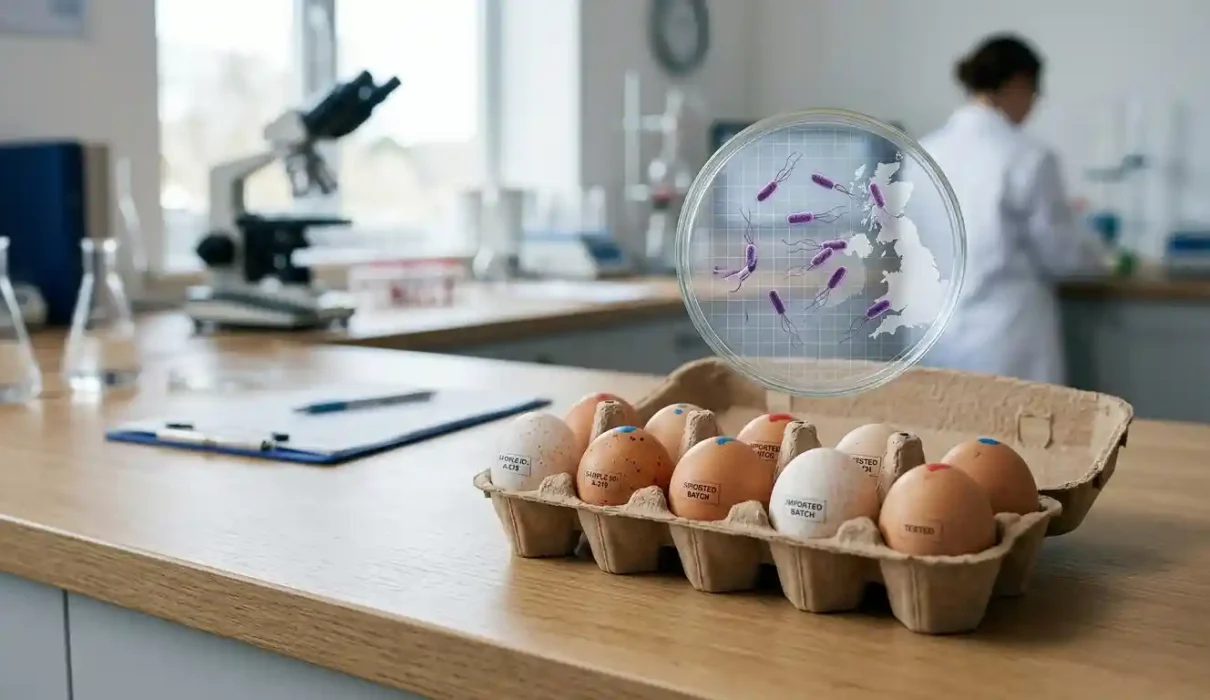
By The UK Health Security Agency and the Food Standards Agency are investigating a national rise in Salmonella Enteritidis infections, with evidence so far pointing towards eggs imported from outside the UK and used mainly in catering settings. Officials say the overall risk to the public remains low and there is no evidence that UK-produced eggs are affected.
The investigation is ongoing. Public health teams are using whole genome sequencing to link cases and trace potential food sources, while reminding consumers and food businesses about safe egg storage and handling.
What we know about the outbreak
According to the latest UKHSA Salmonella outbreak update, the main cluster under investigation is caused by Salmonella Enteritidis strain t5.9411.
As of 25 August 2026, there have been 259 laboratory-confirmed cases linked to this cluster, with sample dates ranging from 11 August 2025 to 8 August 2026. One death has been reported in connection with this cluster. The majority of cases were recorded in 2026.
Earlier reporting put the total at 207 cases, but numbers have risen as further testing and case follow-up has continued. The majority of infections have been in England, with a small number in Scotland, Wales and Northern Ireland. In England, London and Yorkshire and the Humber have recorded the highest counts.
UKHSA also said it is now tracking two additional but genetically distinct clusters of Salmonella Enteritidis, t0.24068 and t5.9765, which have seen increased reporting since June 2026. As of 25 August, there were 177 confirmed cases linked to t0.24068 and 38 confirmed cases linked to t5.9765, with one further death in the t5.9765 cluster. The clusters are being investigated in parallel because of their genetic relatedness and similar food exposures.
Across the main outbreak, cases range from infants to people aged 90. More than a third of people affected have required hospital admission, including two people who developed bloodstream infection. Only around 3% reported travel outside the UK before becoming ill, suggesting the source is within the UK food chain.
UKHSA has said weekly updates on the three outbreaks will be published while investigations continue.
Why imported eggs are being investigated
No definitive source has yet been confirmed, but epidemiological interviews and food-chain analysis have identified a pattern.
Officials found that 83% of people in the main cluster reported eating food prepared outside the home in the week before they became ill. Investigators linked 24 cases to specific food businesses, with 11 of those linked to dishes containing eggs. That pattern, combined with sequencing data, led investigators to focus on eggs imported into the UK and supplied predominantly to restaurants, cafes, takeaways and other catering establishments.
The Food Standards Agency has said imported food must meet the food safety standards set out under UK law and that action will be taken if products are found not to comply. No product recall or withdrawal has been issued because a specific supplier, brand or batch has not yet been identified as the source of contamination.
Health officials have stressed that this is a working hypothesis rather than a confirmed conclusion. As UKHSA noted in its latest statement, the link to imported eggs is indicated by evidence to date, but the investigation remains ongoing and other common sources are still being explored.
Are UK-produced eggs affected?
Both UKHSA and the FSA have said there is currently no evidence that UK-produced eggs are affected by this outbreak.
In the UK, most eggs sold in shops are produced under the British Lion Code of Practice or the Laid in Britain assurance scheme. Hens in these schemes are vaccinated against Salmonella, and there are strict controls on hygiene, storage and traceability. The FSA considers eggs from these schemes to present a very low risk of Salmonella.
The agency’s long-standing advice on UK-assured eggs has not changed. The current investigation is focused on eggs brought in from outside the UK for use in food service, rather than retail eggs sold directly to consumers in supermarkets.
For more detail on the distinction, the FSA has published a food fact check on whether you can get Salmonella from eggs and separate advice on safe storage, handling and use of eggs for catering businesses.
What is Salmonella?
Salmonella is a group of bacteria that is one of the most common causes of food poisoning in the UK. There are more than 2,500 different types, but Salmonella Enteritidis is the type most frequently reported as causing illness in England.
According to the UKHSA information on Salmonella, people usually become infected after eating contaminated food, or after handling raw food and then touching their mouth without washing hands. Contaminated foods can include raw or undercooked poultry, meat, eggs and unpasteurised dairy products, as well as fresh produce that has come into contact with contaminated surfaces.
Person-to-person spread can happen, but it is uncommon. Cross-contamination in the kitchen — for example, when raw egg drips onto ready-to-eat food or work surfaces are not cleaned properly — is a more typical route.
Most infections in England are sporadic, but whole genome sequencing of samples from hospitals and GP practices allows UKHSA to spot when many cases share the same strain, which suggests a common source. That is how the current clusters were identified.
What are the symptoms?
For most people, Salmonella infection causes gastroenteritis. Common symptoms include:
- diarrhoea, which may be watery and sometimes bloody
- stomach cramps and abdominal pain
- fever
- nausea and sometimes vomiting
- headache and general malaise
Symptoms usually begin between 12 and 72 hours after swallowing the bacteria. Illness typically lasts four to seven days and resolves without specific treatment, although some people need medical care for dehydration.
In a small number of cases, Salmonella can spread from the gut into the bloodstream and to other parts of the body, leading to more serious illness such as sepsis. This was reported in two cases in the current outbreak.
The NHS guidance on food poisoning explains common causes, how long symptoms usually last and when to get help. If you are concerned about symptoms, you should contact your GP or NHS 111.
Who is most at risk?
Anyone can develop Salmonella infection, but some groups are more likely to become severely unwell:
- infants and young children under 5
- adults aged 65 and over
- pregnant women
- people with underlying health conditions such as cancer, diabetes, liver or kidney disease
- people with weakened immune systems who require medically supervised diets
These groups are more likely to need hospital care if they become infected, and are advised to take extra care with foods that may contain raw or lightly cooked egg when eating out.
How to reduce the risk from eggs
The current outbreak appears to be linked to food eaten outside the home, but good kitchen hygiene remains the best protection against Salmonella in general. The FSA advice for consumers includes:
- Store eggs in a cool, dry place, ideally in the fridge, and avoid large temperature changes that can cause condensation on the shell.
- Do not wash eggs. The shell has a natural protective coating called the cuticle, and washing can allow bacteria to enter through pores.
- Do not use eggs with cracked or damaged shells, and throw away any egg that has been contaminated by a broken egg, for example in shopping bags.
- Keep eggs away from other foods, both in the shell and after cracking. Take care not to splash raw egg onto worktops, dishes or other foods.
- Wash hands thoroughly with warm water and soap before and after handling eggs, eggshells or egg packaging, and after using the bathroom and before preparing food.
- Clean work surfaces, bowls, whisks and utensils thoroughly with warm soapy water after handling eggs.
- Cook eggs and egg-containing foods thoroughly if you are in a vulnerable group or if you do not know whether the eggs are British Lion or Laid in Britain assured.
- Observe best-before dates and follow storage instructions on packaging.
- Do not rely on the egg float test to judge safety — it only indicates age, not whether harmful bacteria are present.
When eating out, vulnerable groups who are unsure whether eggs carry the British Lion mark or Laid in Britain assurance are advised to choose dishes where eggs are thoroughly cooked, and to avoid raw or lightly cooked egg dishes such as fresh mayonnaise, hollandaise sauce, mousse or lightly cooked omelettes.
Full details are available in the Food Standards Agency advice on Salmonella.
What authorities are advising
UKHSA says the overall risk to the general public remains low, but investigations are continuing. Lead epidemiologist Hannah Charles has said that all Salmonella samples in England undergo whole genome sequencing, which helps to identify new outbreaks quickly.
The FSA has reiterated that its food safety advice remains unchanged: eggs that are thoroughly cooked and handled hygienically should not present a food safety risk. Older adults, young children, pregnant people and those with underlying health conditions can safely eat raw or lightly cooked hen eggs if they carry the British Lion mark or are produced under the Laid in Britain scheme. That advice does not apply to those who are severely immunocompromised and need medically supervised diets, who should follow individual medical advice.
For catering businesses, the FSA has reminded operators to source eggs from reputable suppliers who can demonstrate traceability, to follow good stock control, to store eggs correctly and to avoid cross-contamination. Guidance is available in the FSA catering advice on eggs.
UKHSA and FSA say they will continue to work with Food Standards Scotland and other public health partners. If a specific source is identified, further public health action will be taken, which could include targeted recalls or additional advice to businesses and consumers.
When to seek medical advice
Most people with Salmonella recover at home with rest and plenty of fluids to prevent dehydration. You should seek medical advice if:
- symptoms are severe or last longer than a few days
- you have a high fever, bloody diarrhoea or signs of dehydration such as dark urine and dizziness
- you are in a vulnerable group, including infants, older adults, pregnant women or people with weakened immunity
- symptoms improve and then return, or you develop joint pain, prolonged fever or other unusual symptoms
If you work in food handling and develop diarrhoea or vomiting, you should not handle food for others until at least 48 hours after symptoms have stopped, and you should follow your employer’s sickness policy and NHS guidance on diarrhoea and vomiting.
This article will be updated if UKHSA or the FSA publish new case numbers, recall information or revised advice.

Dr. Samuel Kemp is a Consultant Physician at the Royal Brompton Hospital with specialist expertise in respiratory medicine, including lung cancer, COPD, and advanced interventional bronchoscopy.