
 By
A large pooled analysis published in 2026 adds to the growing evidence that diets high in ultra-processed foods are linked to poorer long-term health. Researchers combined data from 51 prospective cohort studies involving 8,819,894 adults across the Americas, Europe, Asia and Oceania, and examined how consumption was related to multiple chronic conditions.
The study did not test whether ultra-processed foods directly cause disease. Like other observational research, it looked for associations over time. What it found was a consistent pattern: people reporting higher intakes of ultra-processed foods had higher rates of several health outcomes, and risk tended to rise as intake rose. Each additional 100 grams per day was associated with a measurable increase in risk for several outcomes.
What the New Study Found
The paper, titled “Ultra-processed food consumption and risk of multiple chronic diseases among 8,819,894 adults from 51 prospective cohorts: a dose-response meta-analysis,” was published in the open-access journal Family Medicine and Community Health. The full study in Family Medicine and Community Health and its summary on PubMed provide the detailed methodology. The DOI is 10.1136/fmch-2026-003925.
To be included, studies had to follow adults 18 years or older forward in time, measure ultra-processed food consumption at baseline, and track health outcomes. The researchers searched databases through April 2026 and included 51 cohorts that met those criteria. Average ages in the individual studies ranged from 23 to 77 years, and follow-up ranged from 2 to 32 years.
Dietary intake was assessed with standard tools used in nutrition research, including food-frequency questionnaires, 24-hour dietary recalls, and dietary histories. The authors converted intakes into grams per day and also looked at increases in 50-gram servings and at a 10% rise in the share of diet coming from ultra-processed foods by weight or energy.
They then performed two kinds of synthesis. First, they compared higher versus lower intake categories within each study. Second, they conducted dose-response analyses, which ask whether risk changes in a stepwise way as intake increases — for example, what happens for every extra 100 grams per day. The research was first presented at the 2025 Annual Meeting of American College of Cardiology Asia, according to the BMJ Group press summary.
Higher Ultra-Processed Food Intake Was Linked to Several Health Risks
When higher consumption was compared with lower consumption across studies, higher intake was associated with greater risk of multiple outcomes. The pooled estimates were reported as hazard ratios, which the authors translated into percentage increases:
| Health outcome | Association with higher vs lower UPF intake |
|---|---|
| Cardiovascular events (including heart attack, stroke, coronary artery disease, cardiovascular death) | 24% higher risk |
| Cancer events, including death from cancer | 12% higher risk |
| Obesity or overweight | 23% higher risk |
| Metabolic syndrome or diabetes | 24% higher risk |
| Depression or anxiety | 27% higher risk |
| Digestive diseases | 31% higher risk |
| High blood pressure | 11% higher risk |
| Death from any cause | 18% higher risk |
These percentages are relative risks, not absolute risks. A 24% higher relative risk does not mean 24 out of 100 people will develop the condition. It means that within these study populations, the rate was higher in the higher-intake groups compared with the lower-intake groups. The absolute change for any individual depends on their baseline risk, age, and other factors.
In dose-response analyses, the researchers observed that each additional 100 grams per day was associated with higher risks for four outcomes: cardiovascular events by about 14%, cancer by about 4%, all-cause mortality by about 3%, and metabolic syndrome/diabetes by about 2%. They also reported that each 10% increase in ultra-processed food share was associated with a 16% higher risk of metabolic syndrome/diabetes. These dose-response estimates come from observational data and should be read as population-level associations rather than predictions for one person.
What Does an Extra 100 Grams of Ultra-Processed Food Mean?
100 grams is a weight, not a single product. In practical terms, 100 grams is about 3.5 ounces. It could be roughly equivalent to a small bag of potato chips plus a sweetened soft drink, or a packaged muffin and a couple of slices of processed ham, or one standard serving of many ready-to-heat frozen meals.
Because ultra-processed foods vary widely in composition — some are mostly sugar and fat, others contain more salt, additives, or refined grains — 100 grams does not mean the same thing nutritionally in every case. The researchers used 100 grams as a standardized unit to examine how risk changes across populations, not to suggest that all 100-gram portions carry identical health effects.
What Counts as Ultra-Processed Food?
The definition used in most recent research, including this meta-analysis, comes from the NOVA classification system. NOVA groups foods by how much industrial processing they have undergone, not just by their nutrient content.
Ultra-processed foods are industrially formulated products made mostly from substances extracted from foods or synthesized in laboratories, with little if any intact whole food remaining. They typically contain additives such as flavors, colors, emulsifiers, sweeteners, and preservatives, and are designed to be ready-to-eat or ready-to-heat, highly palatable, and shelf-stable.
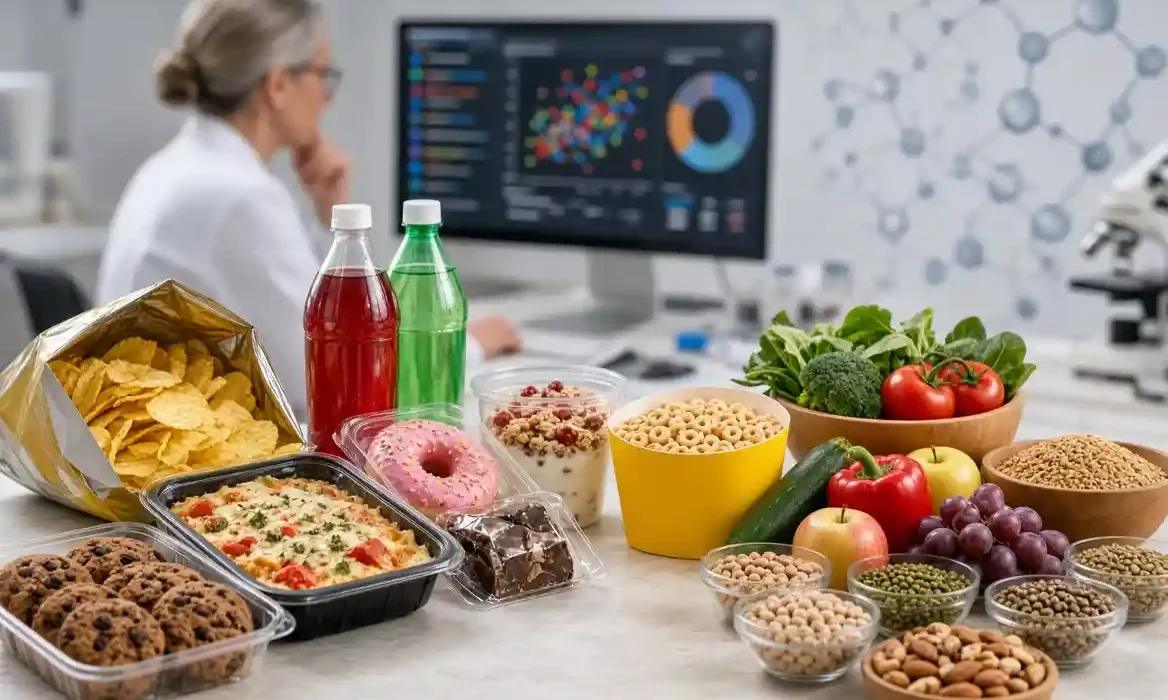
Examples often included in this category are packaged salty snacks, sugary drinks and energy drinks, confectionery, sweetened breakfast cereals, mass-produced breads with emulsifiers, reconstituted meat products like hot dogs and nuggets, instant noodles and soups, frozen pizza, and many ready meals and desserts made with industrial formulations.
That does not mean every packaged, canned, frozen, or prepared food is ultra-processed. Canned beans, frozen vegetables without sauces, pasteurized milk, plain yogurt, tofu, and whole-grain breads made with basic ingredients are processed or minimally processed, but are not considered ultra-processed under NOVA. The distinction matters because processing itself can be useful for safety and preservation.
Why Might Ultra-Processed Foods Affect Health?
The meta-analysis itself did not prove how ultra-processed foods might influence disease risk. The authors discussed several possible explanations that have been raised in previous experimental and observational work, and these remain hypotheses rather than conclusions from this dataset.
Many ultra-processed foods are energy-dense, higher in added sugars and sodium, and lower in dietary fiber, protein, vitamins, and minerals compared with less processed alternatives. Diets higher in these products can make it easier to consume more calories overall and may displace foods like vegetables, fruits, legumes, whole grains, nuts and seeds that provide fiber and other protective nutrients.
Other proposed factors involve food structure. Intensive processing can break down the natural food matrix, altering how quickly foods are digested and absorbed. Some researchers are also interested in additives and compounds formed during high-heat processing, such as acrylamide or acrolein, and in the idea that combinations of additives could have a “cocktail effect.” Laboratory studies have suggested that certain emulsifiers, sweeteners, and other industrial ingredients might affect gut microbiota, inflammation, appetite regulation, and insulin sensitivity, but human evidence is still developing.
The authors also noted that people who eat more ultra-processed foods often share other lifestyle patterns, including differences in physical activity, sleep, stress, smoking, and socioeconomic factors. Those patterns are difficult to fully separate from diet in observational studies, even when statistical adjustments are made.
Is All Processed Food Bad for You?
No. Processing covers a wide range of techniques, and many are beneficial.
Minimally processed foods are foods that have been cleaned, cut, frozen, dried, fermented, pasteurized, or otherwise preserved without adding much sugar, salt, oil, or additives. Examples include frozen fruits and vegetables, roasted nuts without added sugar, pasteurized milk, plain dried beans, and fresh or frozen fish.
Processed foods typically have a few ingredients added for preservation or flavor — such as canned fish in oil, cheese, or freshly made breads. They can be part of a healthy eating pattern, especially when they make nutritious foods more accessible.
Ultra-processed foods, by contrast, are characterized by industrial formulations with many ingredients you would not use in a home kitchen. Public health organizations, including the UK NHS Eatwell Guide resources and the U.S. Dietary Guidelines, generally advise focusing on whole and minimally processed foods while limiting foods high in added sugars, sodium, and saturated fat — a description that overlaps substantially with many, but not all, ultra-processed products.
The Important Limitations of the Study
This was a synthesis of prospective cohort studies, not a randomized trial. That design can show associations over time, but it cannot establish that ultra-processed food consumption directly causes any of the outcomes.
Dietary data relied on self-reported methods. Food-frequency questionnaires and 24-hour recalls are practical for large populations, but they are prone to measurement error and to under- or over-reporting. Participants’ diets may also have changed during long follow-up periods that were not fully captured.
Residual confounding is another key limitation. Even after adjustment for factors like age, sex, smoking, physical activity, and total energy intake, people who consume more ultra-processed foods may differ in other ways that affect health, including access to healthcare, income, education, stress, and neighborhood food environments. Those differences are hard to fully remove statistically.
The authors also excluded people younger than 18, so findings do not apply directly to children and adolescents. Classification of foods as ultra-processed can vary between studies, and methods of measuring intake were not identical. Finally, the analysis does not identify a specific safe or unsafe threshold for everyone. The dose-response findings describe average patterns across studies rather than a universal cutoff.
What Can People Do About Ultra-Processed Foods?
The researchers concluded that reducing ultra-processed food consumption and replacing it with minimally processed alternatives may be relevant for prevention and primary care management, but they did not prescribe a personal prescription.
For most people, a helpful approach is to look at overall dietary patterns rather than single foods. Shifting toward more vegetables, fruits, legumes, whole grains, nuts, seeds, and other minimally processed staples tends to lower the share of energy coming from ultra-processed sources without requiring rigid rules.
Small, realistic changes often work better than attempting to eliminate every packaged item. For example, choosing plain rolled oats with fruit instead of sweetened instant oatmeal packets, water or unsweetened tea instead of sugary drinks, roasted chickpeas or a handful of nuts instead of flavored chips, and simple sandwiches made with canned fish or beans and vegetables instead of ready-to-heat processed meat meals can reduce ultra-processed food intake while keeping convenience.
Reading ingredient lists can help. A long list with added sugars under several names, hydrogenated oils, flavorings, colorings, and emulsifiers you would not use at home often indicates an ultra-processed product, though not every such product is equally concerning.
This article is for information only and is not individualized medical or nutrition advice. If you have specific health conditions or dietary needs, talk with your primary care clinician or a registered dietitian.
The Bottom Line
In this pooled analysis of more than 8.8 million adults followed for up to 32 years, higher intake of ultra-processed foods was associated with higher risks of cardiovascular events, cancer, overweight and obesity, metabolic syndrome or diabetes, depression or anxiety, digestive diseases, high blood pressure, and death from any cause. Each additional 100 grams per day was associated with higher risks for cardiovascular events, cancer, all-cause mortality, and metabolic syndrome or diabetes.
Those are associations from observational research, not proof of direct causation for any individual. Dietary measurement, lifestyle differences, and differences in how foods were classified across studies limit what can be concluded. The findings do not establish a single safe amount of ultra-processed foods for everyone, but they support current guidance to emphasize minimally processed, nutrient-rich foods and to limit diets high in highly processed, energy-dense products.
Frequently Asked Questions
What are ultra-processed foods?
Ultra-processed foods are industrially formulated products made mostly from extracts and additives rather than whole foods. They are typically ready-to-eat or ready-to-heat, designed for long shelf life and palatability, and often contain added sugars, salt, fats, flavors, colors, and emulsifiers. Common examples include sugary drinks, packaged snacks, confectionery, reconstituted meat products, and many frozen ready meals.
Is eating ultra-processed food every day unhealthy?
Occasional consumption is common and not automatically harmful on its own. What research links to higher disease risk is overall dietary patterns high in ultra-processed foods over time. Diets with a higher proportion of minimally processed foods such as vegetables, fruits, legumes, whole grains, nuts, and seeds are generally associated with better long-term health.
Does 100 grams of ultra-processed food increase disease risk?
In this meta-analysis, each additional 100 grams per day was associated at the population level with about a 14% higher relative risk of cardiovascular events, 4% higher for cancer, 3% higher for death from any cause, and 2% higher for metabolic syndrome or diabetes. This does not mean 100 grams will cause disease in an individual, and 100 grams of different products does not have the same nutritional makeup.
Are all processed foods unhealthy?
No. Freezing, drying, pasteurizing, fermenting, and canning can make foods safer, more affordable, and more available. Minimally processed foods like frozen vegetables or plain yogurt are not the same as ultra-processed foods. The concern is more specific to industrially formulated products low in fiber and micronutrients and high in added sugars, sodium, and additives.
Can ultra-processed foods cause diabetes?
This study found an association: higher ultra-processed food intake was linked to a higher risk of metabolic syndrome or diabetes, including a 2% higher relative risk per extra 100 grams per day and 16% higher per 10% increase in dietary share. Because the studies were observational, this does not prove that ultra-processed foods directly cause diabetes. Other factors such as overall diet quality, physical activity, weight, and genetics also play major roles.
Should I completely avoid ultra-processed foods?
Complete avoidance is not necessary for most people and can be unrealistic. A more practical goal is to reduce the share of ultra-processed foods and replace them when possible with minimally processed options. Focusing on overall patterns, rather than strict elimination, is more sustainable and consistent with guidance from major health organizations.
What foods should I eat instead of ultra-processed foods?
Foods that are minimally processed or prepared from simple ingredients, such as vegetables, fruits, beans and lentils, whole grains like brown rice or oats, nuts, seeds, eggs, fresh or frozen fish, and plain dairy or unsweetened plant alternatives, are commonly recommended. Choosing water over sugary drinks and cooking more meals from basic ingredients can also lower ultra-processed food intake without requiring a complete diet overhaul.

Dr. Samuel Kemp is a Consultant Physician at the Royal Brompton Hospital with specialist expertise in respiratory medicine, including lung cancer, COPD, and advanced interventional bronchoscopy.