
 By
By Let’s be honest for a second. If you’ve landed here, you’ve probably been scrolling. Maybe you’ve seen the headlines about a “new generation” of weight loss medications. Perhaps a friend mentioned something called Mounjaro at dinner, or you’ve been quietly wondering if the private clinics popping up on your Instagram feed are actually worth the investment.
You’re not alone. In pharmacies across the UK from London to Leeds there’s been a quiet revolution happening behind the counters. Mounjaro (the brand name for tirzepatide) has arrived, and it’s quickly become one of the most talked-about tools for weight management since the NHS began seriously reconsidering its approach to obesity.
But here’s the tension most articles ignore: you’re excited, but you’re also nervous. You want to know if it works, obviously. But more than that, you want to know what actually happens when you take the cap off that first pen. Does the nausea last? Will you lose your hair? Do you have to give up birthdays and dinner parties for good?
This guide is designed to walk you through the reality of starting Mounjaro. We’ll look at the precise dosage schedules, the realistic timeline of weight loss, and crucially the side effects you need to know about before you inject. No hype. No shame. Just the evidence, and a bit of honesty from someone who’s seen how this plays out.
Key Takeaways (if you’re in a rush)
- How it works: Mounjaro (tirzepatide) mimics two natural hormones – GLP-1 and GIP – to slow digestion and turn down the brain’s “food noise”.
- Dosing schedule: Strict step-up schedule: start at 2.5mg for four weeks, then move up only if needed. Skipping steps is a bad idea.
- Side effects: Nausea, constipation, fatigue are common early on. Manageable for most, and usually fade after a few weeks.
- How much weight? Clinical trials show 15–20% body weight loss over 72 weeks. But that’s an average – your mileage will vary.
- Not a quick fix: Medical supervision is essential. Stop the drug, and weight tends to creep back unless habits have genuinely changed.
What Is Mounjaro and How Does It Actually Work?
If you strip away the marketing and the celebrity gossip, Mounjaro is actually a rather clever piece of science. It belongs to a class of drugs known as dual GIP and GLP-1 receptor agonists. That’s a mouthful, so let me translate.
Your body naturally releases hormones after you eat. One of these, GLP-1, tells your pancreas to release insulin and signals to your brain that you are full. Another, GIP, helps regulate how your body breaks down fat. Mounjaro essentially takes the volume knob on both of these hormones and turns it up.
The result? Two distinct things happen. First, your stomach empties much slower than usual. Second, the “food noise” in your brain – that constant chatter about whether you fancy a biscuit – quietens down dramatically. For many people, this is the biggest relief. They don’t realise how loud that noise was until it’s gone.
Why Mounjaro Has Become So Popular in the UK
A few years ago, if you mentioned a weight loss injection, people assumed you meant something unsafe. That’s shifted. With obesity rates pressuring the NHS, and drugs like Ozempic becoming household names, the door opened for Mounjaro. Private prescription services have grown rapidly, and obesity specialists are relieved to finally have tools that actually move the needle. Still, popularity doesn’t mean it’s right for everyone and NHS waiting lists remain long, which is why many turn to regulated private providers.
Who Can Actually Take Mounjaro? (UK rules)
In the UK, tirzepatide is licensed for adults with a BMI of 30 or higher, or a BMI of 27 or higher with a weight-related condition (like high blood pressure or type 2 diabetes). Private prescriptions require a detailed health questionnaire: they’ll ask about medullary thyroid cancer, pancreatitis, and gallbladder disease. On the NHS, access is tighter usually through specialist tier 3 weight management services, which have long waiting lists. Most people reading this will pay for private prescriptions, roughly £150–£300 per month depending on the dose.
Mounjaro Dosage Guide for Beginners (Don’t Skip This)
You do not start at the full dose. You start low and go slow. The stepped schedule exists to minimise side effects. The pen is pre-filled and injected once weekly under the skin of your stomach, thigh, or upper arm. The needle is tiny – most people say they barely feel it.
| Duration | Weekly Dose | What it’s for |
|---|---|---|
| Weeks 1–4 | 2.5mg | Loading dose (not for major loss – just getting your body used to it) |
| Weeks 5–8 | 5.0mg | First therapeutic dose – weight loss often starts here |
| Weeks 9–12 | 7.5mg | Gradual increase if you’re tolerating it well |
| Weeks 13–16 | 10.0mg | Further increase if needed |
| Weeks 17–20 | 12.5mg | Higher dose |
| Week 21 onward | 15.0mg | Maximum maintenance dose (many never need this) |
What to Expect During Your First Month on Mounjaro
Week 1: The Adjustment
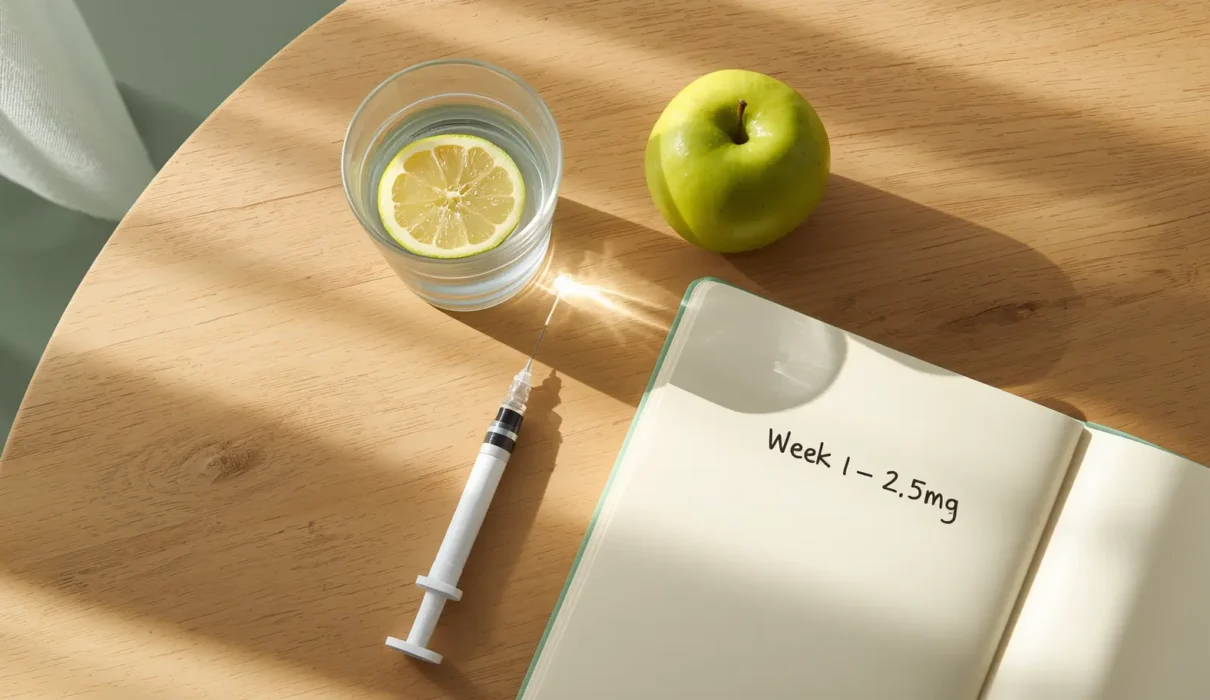
You take your first 2.5mg injection. The needle is tiny – you barely feel it. By day two or three, appetite suppression might kick in. You might also feel oddly tired: a low-grade fatigue. That’s normal. Your body is recalibrating. Don’t panic. Keep water nearby and go easy on yourself.
Week 2: The Gut Speaks
Nausea often appears around the second injection. Usually a persistent queasiness, not severe vomiting. Small, plain meals help – think toast, crackers, soup. Constipation can creep in; increase water intake now. Like, really increase it. Two litres minimum.
Weeks 3–4: Finding Your Rhythm
By now most people have found their footing. Nausea eases. You’ve learned which foods work (lean protein, soups) and which don’t (fried, buttery, huge portions). Some lose a kilo per week; others lose nothing yet because they’re still on 2.5mg. Both are normal. You’re not “failing” – you’re still on the starter dose.
Common Mounjaro Side Effects (Let’s Be Real)
Nausea affects roughly one in five. It’s often worst the day after injection. Small meals, ginger tea, and avoiding lying down straight after eating help. Some people swear by sniffing an alcohol wipe for sudden waves – odd but it works.
Constipation and diarrhoea – your gut is adjusting to slower transit. For constipation: hydration and fibre (add fibre slowly; too much at once makes things worse).
Fatigue is under-discussed but very real. Usually improves after the first month. Don’t be shocked if you want a nap the day after your jab.
Heartburn and “sulphur burps” (harmless but weird) can happen, especially after rich foods. Keep antacids handy.
Serious Risks and Important Warnings
I don’t want to alarm you, but real risks exist. Pancreatitis is rare if you have severe upper abdominal pain that radiates to your back, seek help. Gallbladder issues (gallstones) are more common with rapid weight loss – any rapid weight loss, not just with Mounjaro. Dehydration sends some people to A&E – watch for dizziness, dark urine, dry mouth. Mounjaro is contraindicated if you have a personal or family history of medullary thyroid carcinoma or MEN-2. Always disclose your full medical history. No shortcuts.
How Much Weight Can You Realistically Lose on Mounjaro?
In the SURMOUNT-1 trial, participants on 15mg lost an average of 20.9% of body weight over 72 weeks roughly 22kg for a 105kg person. But that’s an average. People with type 2 diabetes tend to lose less. Those who prioritise protein and resistance training lose more fat and less muscle. A realistic goal is 0.5 to 1kg per week during the first six months, slowing later. Faster loss usually means muscle loss, which harms your metabolism long-term. Slow and steady wins this race.
What Should You Eat While Taking Mounjaro? (UK-friendly)
Because you have limited stomach “space,” make every bite count. Prioritise protein: chicken, fish, Greek yoghurt, lentils, tofu. Aim for about 1.2g per kg of body weight daily. Choose smart carbs: porridge, sweet potato, brown rice. Hydration is non-negotiable – two to three litres of water, herbal teas, maybe a squash if plain water bores you.
UK-friendly example: a jacket potato with baked beans and cheese works well. A full fry-up? Often triggers nausea and sulphur burps. You’ve been warned.
Common Mistakes Beginners Make
- Eating too little – thrilled by suppression, some drop below 800 calories. That backfires (fatigue, constipation, muscle loss). Eat anyway, just smaller.
- Increasing doses too quickly – respect the four-week schedule. Your future self will thank you.
- Forgetting fibre and water – if no bowel movement in three days, intervene with prune juice or a gentle laxative (speak to a pharmacist).
- Injecting the same spot every week – rotate sites (left thigh, right abdomen, upper arm). Reduces skin reactions.
- Treating the injection as a magic wand – the drug works best when you collaborate: smaller portions, vegetables, walking. It’s a tool, not a fairy godmother.
What Happens When You Stop Taking Mounjaro? (The Honest Answer)
This is the most important question. Mounjaro is a treatment, not a cure. In the SURMOUNT-4 trial, people who stopped regained about two-thirds of lost weight within one year. Why? Because the hormones GLP-1 and GIP return to baseline. The food noise comes back. Your metabolic set point remembers where it used to be.
That doesn’t mean everyone regains everything. Some maintain a portion of weight loss if they’ve genuinely rebuilt diet and exercise habits. Others stay on a lower maintenance dose long-term. A thoughtful discontinuation plan involves tapering down over months while doubling down on lifestyle strategies. The honest truth: most people who stop will regain. That’s not failure it’s biology. Discuss a long-term maintenance plan with your doctor before you start.
Frequently Asked Questions
Some people feel reduced appetite within 24–48 hours of the first 2.5mg dose. For others, it takes 2–3 weeks. Full effect usually occurs around 5mg or 7.5mg. Don’t panic if nothing happens in week one.
Yes, but only through specialist weight management services (typically BMI over 35 with complications). Most NHS patients cannot access it for weight loss alone; private prescriptions are the main route. Expect to pay privately unless you’re under a hospital team.
Moderate drinking is unlikely to cause serious harm, but alcohol can worsen nausea, dehydration, and blood sugar swings. Many people naturally lose interest in alcohol on Mounjaro – partly the appetite suppression, partly because a glass of wine just doesn’t feel as good.
Any rapid weight loss causes some muscle loss. The drug itself doesn’t damage muscle, but if you undereat protein and skip resistance training, you will lose muscle. Strength training (even bodyweight exercises) plus high protein protects against this.
If the next scheduled dose is more than three days away, take the missed dose immediately. If within three days, skip it and continue on schedule. Never double up. When in doubt, contact your prescriber.
Yes, significantly. Trials show most people regain roughly two-thirds of lost weight within a year. Long-term success usually requires ongoing medication, major lifestyle changes, or both. That’s not pessimism that’s the data.
It slows stomach emptying, affecting absorption of oral medicines – particularly birth control pills, some antidepressants, and thyroid medication. Tell your prescriber everything you take, including herbal supplements.
Yes, but stop the old medication for at least one week before starting Mounjaro at 2.5mg. Never take two GLP-1 or dual-agonist medications together. Your prescriber should guide this.
Usually yes. The drug peaks roughly 24–48 hours after injection. Many people inject on Friday evening to have a gentle weekend at home. Clever strategy.
Not necessarily, but many choose a low maintenance dose because the benefits for appetite and glycaemic control are lasting. Work with your prescriber on a personalised plan. Some people taper to a low dose every 10–14 days. Others stop completely and accept some regain. No single right answer.
Final Thoughts: Is Mounjaro Worth It?
Starting Mounjaro isn’t a small decision. It’s a weekly injection that alters fundamental biology – how full you feel, how loudly your brain asks for food, how quickly your stomach empties. For many people with stubborn obesity or type 2 diabetes, it has been genuinely life-changing. But it works best when you come to it with open eyes. You will probably feel nauseous sometimes. You’ll need to drink more water than you think. The scale will stall. And if you stop, the weight may well come back.
None of that means it isn’t worth trying. It just means it’s medicine, real medicine, not a miracle. If you and your doctor decide this is the right path, go gently. Trust the low starting dose. Pack crackers for the queasy days. Lift something heavy twice a week. And give yourself credit for taking a thoughtful, informed step toward better health. That courage matters more than any number on the scale.
Follow UKHealthInsight for more tips!

Dr. Samuel Kemp is a Consultant Physician at the Royal Brompton Hospital with specialist expertise in respiratory medicine, including lung cancer, COPD, and advanced interventional bronchoscopy.