
 By
By Simple Mediterranean diet recipes help with weight loss by focusing on whole foods, healthy fats, and high-fibre ingredients that keep you fuller for longer. Meals built around vegetables, olive oil, fish, legumes, and whole grains are naturally lower in calories and highly nutritious, making sustainable weight loss more achievable without strict calorie counting.
The Mediterranean diet has topped global healthy eating rankings for several years running — and for good reason. It’s flexible, flavourful, and backed by a strong body of research linking it to improved heart health, better blood sugar management, and steady, sustainable weight loss.
For beginners, the best part is that Mediterranean cooking doesn’t require specialist ingredients or complicated techniques. Most of the staples — tinned chickpeas, olive oil, wholegrain pasta, frozen fish are readily available at your local Tesco, Sainsbury’s, or Aldi. This guide covers everything you need to get started in 2026, including seven easy recipes, a one-day meal plan, and practical tips tailored to UK readers.
What Is the Mediterranean Diet?
The Mediterranean diet is inspired by the traditional eating habits of countries bordering the Mediterranean Sea, including Greece, Italy, and Spain. Rather than a rigid set of rules, it’s a flexible eating pattern centred on whole, minimally processed foods.
Core principles include:
- Plenty of vegetables, fruit, and legumes
- Whole grains (such as brown rice, oats, and wholegrain bread)
- Healthy fats from olive oil, nuts, and seeds
- Fish and seafood at least twice a week
- Moderate amounts of poultry, eggs, and dairy
- Red meat eaten occasionally
- Minimal ultra-processed foods, refined sugar, and salt
In a UK context, the diet fits well with widely available ingredients and aligns closely with NHS guidance on healthy eating.
Why the Mediterranean Diet Helps With Weight Loss
The Mediterranean diet promotes weight loss through satiety, not deprivation. Here’s why it works:
Nutrient-dense meals — Foods like lentils, chickpeas, and salmon are packed with protein and micronutrients, meaning you get more nutritional value per calorie.
High-fibre foods — Vegetables, legumes, and whole grains slow digestion and help control hunger throughout the day.
Healthy fats improve fullness — Olive oil and avocado take longer to digest than refined carbohydrates, reducing the urge to snack between meals.
No ultra-processed foods — Cutting out crisps, ready meals, and sugary drinks alone can significantly reduce daily calorie intake.
Research published in the New England Journal of Medicine found that people following a Mediterranean-style diet lost more weight and kept it off longer than those on low-fat diets.
7 Simple Mediterranean Diet Recipes for Weight Loss
1. Mediterranean Chickpea Salad
Ingredients: 1 tin of chickpeas (drained), 1 cucumber, 10 cherry tomatoes, ½ red onion, handful of fresh parsley, juice of 1 lemon, 2 tbsp olive oil, salt and pepper.
Method: Roughly chop the vegetables. Combine all ingredients in a bowl and toss with olive oil and lemon juice. Season to taste.
Approx. calories: 320 kcal per serving
2. Greek Yogurt Breakfast Bowl
Ingredients: 150g full-fat Greek yogurt, 1 tbsp honey, handful of mixed berries, 1 tbsp mixed seeds, a few walnuts.
Method: Spoon yogurt into a bowl. Top with berries, seeds, and walnuts. Drizzle with honey.
Approx. calories: 290 kcal per serving
3. Grilled Salmon with Lemon & Olive Oil
Ingredients: 1 salmon fillet, juice of 1 lemon, 1 tbsp olive oil, 1 clove garlic (minced), fresh dill, salt and pepper.
Method: Mix olive oil, lemon juice, garlic, and dill. Brush over salmon and grill for 12–15 minutes until cooked through. Serve with a side salad or steamed greens.
Approx. calories: 380 kcal per serving
4. Mediterranean Quinoa Vegetable Bowl
Ingredients: 80g quinoa (cooked), ½ courgette, ½ red pepper, handful of spinach, 2 tbsp hummus, olive oil, lemon juice.
Method: Roast the courgette and pepper with olive oil at 200°C for 20 minutes. Assemble over quinoa with spinach and a dollop of hummus. Drizzle with lemon juice.
Approx. calories: 420 kcal per serving
5. Tomato and Olive Wholegrain Pasta
Ingredients: 80g wholegrain pasta (dry weight), 1 tin of chopped tomatoes, handful of kalamata olives, 1 clove garlic, 1 tbsp olive oil, fresh basil, chilli flakes.
Method: Sauté garlic in olive oil. Add chopped tomatoes and simmer for 10 minutes. Stir in olives and chilli flakes. Toss with cooked pasta and top with fresh basil.
Approx. calories: 450 kcal per serving
6. Mediterranean Lentil Soup
Ingredients: 150g red lentils, 1 tin of chopped tomatoes, 1 onion, 2 cloves garlic, 1 tsp cumin, 1 tsp smoked paprika, 700ml vegetable stock, 1 tbsp olive oil.
Method: Soften onion and garlic in olive oil. Add spices, lentils, tomatoes, and stock. Simmer for 25 minutes until lentils are soft. Blend partially for a thicker texture.
Approx. calories: 310 kcal per serving
7. Avocado and Feta Wholegrain Toast
Ingredients: 2 slices of wholegrain bread, ½ ripe avocado, 30g crumbled feta, cherry tomatoes, lemon juice, chilli flakes.
Method: Toast the bread. Mash avocado with lemon juice and spread over each slice. Top with feta, sliced tomatoes, and a pinch of chilli flakes.
Approx. calories: 370 kcal per serving
Sample 1-Day Mediterranean Diet Meal Plan for Weight Loss
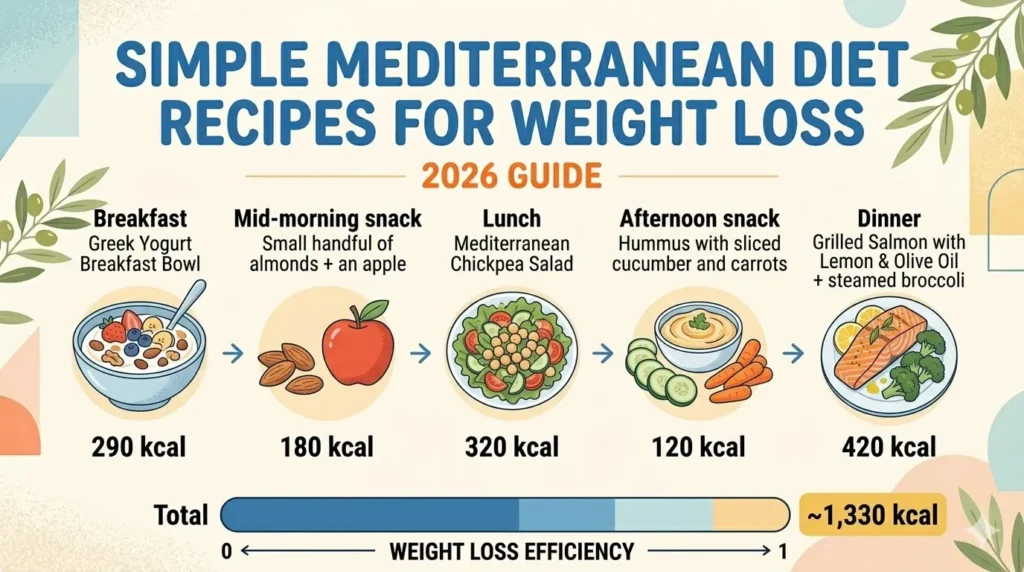
This provides a gentle calorie deficit for most adults while keeping meals satisfying and nutritious. Adjust portions based on your individual needs.
Tips for Following the Mediterranean Diet in the UK
Choose a quality olive oil. Extra-virgin olive oil is the gold standard for cooking and dressing salads. Look for bottles labelled “cold-pressed” or “first press” — most major UK supermarkets stock good-value options.
Shop seasonally. UK seasonal produce — courgettes in summer, butternut squash in autumn, purple sprouting broccoli in spring — tends to be cheaper and fresher than imported alternatives. Seasonal eating also naturally aligns with Mediterranean-style cooking.
Don’t ignore frozen fish. Fresh salmon and sea bass can be expensive. Frozen fillets deliver the same nutritional profile at a fraction of the cost and keep well in the freezer.
Balance calories thoughtfully. Healthy fats and whole grains are nutritious, but they still contribute to your overall calorie intake. For weight loss, a modest daily deficit of 300–500 kcal is generally recommended by the NHS. Focus on portion sizes rather than eliminating food groups.
Swap gradually. You don’t need to overhaul your entire diet overnight. Start by replacing refined grains with wholegrain alternatives, and adding an extra portion of vegetables to your main meals.
Common Mistakes People Make on the Mediterranean Diet
Overeating healthy fats. Olive oil, nuts, and avocado are all nutritious, but they’re also calorie-dense. A tablespoon of olive oil contains around 120 kcal. Used generously across multiple meals, those calories add up quickly.
Large portions of wholegrains. Brown rice, quinoa, and wholegrain pasta are excellent choices, but doubling up on portion sizes can push your calorie intake higher than intended. Use uncooked weight as a guide: 60–80g of dry pasta or grains per serving is generally appropriate.
Treating it as a free pass. Some people interpret “healthy diet” as a licence to eat unlimited quantities. The Mediterranean diet encourages balanced eating, not unlimited eating. Mindful portions remain important for weight loss.
Neglecting protein. Plant-heavy eating is a core feature of the Mediterranean diet, but some beginners end up with meals that lack sufficient protein. Make sure each meal includes a solid source — whether that’s fish, eggs, Greek yogurt, lentils, or chickpeas.
Skipping meal planning. Without a loose plan in place, it’s easy to fall back on convenience foods. Spending 20–30 minutes each week mapping out your beginner healthy meal plans makes a significant difference to consistency.
The Mediterranean Diet Remains One of the Smartest Choices for 2026
Few eating patterns combine scientific backing, ease of cooking, and long-term sustainability quite like the Mediterranean diet. The recipes in this guide are proof that nutritious food doesn’t have to be complicated or expensive — most can be on the table in under 30 minutes using ingredients from any UK supermarket.
The key is consistency over perfection. Build your meals around vegetables, whole grains, healthy fats, and lean protein. Manage your portion sizes. And enjoy the process — Mediterranean cooking is fundamentally about good food shared well.
For more support on reaching your goals, explore our guides on healthy weight loss tips and best diets for sustainable weight loss.
Frequently Asked Questions
Can the Mediterranean diet help with weight loss?
Yes. The Mediterranean diet supports weight loss by prioritising high-fibre, nutrient-dense foods that help control hunger. Studies show it produces comparable or superior weight loss results to other popular diets, with better long-term adherence.
What are simple Mediterranean meals for beginners?
Good starting points include a Greek yogurt breakfast bowl, Mediterranean chickpea salad, grilled salmon with vegetables, or wholegrain pasta with a tomato and olive sauce. These meals require minimal cooking skills and use widely available ingredients.
How many calories should you eat on the Mediterranean diet?
Calorie needs vary depending on age, sex, activity level, and health goals. For weight loss, most adults aim for 1,200–1,600 kcal per day. The NHS recommends a daily deficit of around 500 kcal below your maintenance intake for gradual, sustainable weight loss.
Is the Mediterranean diet healthy for everyday use?
Yes. The Mediterranean diet is widely regarded by nutritionists and healthcare professionals as one of the healthiest sustainable eating patterns for daily life. It supports heart health, gut health, blood sugar balance, and healthy weight management.
What foods should you avoid on the Mediterranean diet?
Limit or avoid ultra-processed foods, refined sugar, white bread, sugary drinks, processed meats (such as bacon and sausages), and excessive red meat. These foods are not in keeping with Mediterranean diet principles and can undermine weight loss progress.
Can I follow the Mediterranean diet on a budget in the UK?
Absolutely. Staples like tinned legumes, frozen fish, seasonal vegetables, eggs, and own-brand olive oil make the Mediterranean diet accessible on a modest budget. Planning meals in advance and shopping to a list helps keep costs down further.
Follow UKHealthInsight for more tips!

Dr. Samuel Kemp is a Consultant Physician at the Royal Brompton Hospital with specialist expertise in respiratory medicine, including lung cancer, COPD, and advanced interventional bronchoscopy.
1 Comment