
 By
By Lipoproteins are the body’s solution to a basic transport problem. Fats such as triglycerides and cholesterol are essential for energy, cell structure and hormone production, but they do not dissolve in water. Since blood is largely water, these lipids need a special carrier to move between the gut, liver and other tissues. Lipoproteins provide that carrier system.
Every meal containing fat, and every triglyceride made in the liver, must be delivered to where it is needed or stored. Lipoproteins make this possible. They are microscopic particles with a fat-filled core and a water-compatible surface that allows them to travel freely in the bloodstream, delivering lipids in a controlled way.
What Are Lipids?
Lipids are a diverse group of hydrophobic molecules. The main types relevant here are:
- Triglycerides: The most abundant lipid in the body, formed from glycerol and three fatty acids. They are a major energy source and are stored in adipose tissue.
- Cholesterol: A structural component of cell membranes and a precursor for bile acids, vitamin D and steroid hormones. It exists as free (unesterified) cholesterol and as cholesterol esters, where a fatty acid is attached for storage.
Because of their hydrophobicity, lipids cannot circulate freely in blood plasma. They must be packaged.
What Are Lipoproteins?
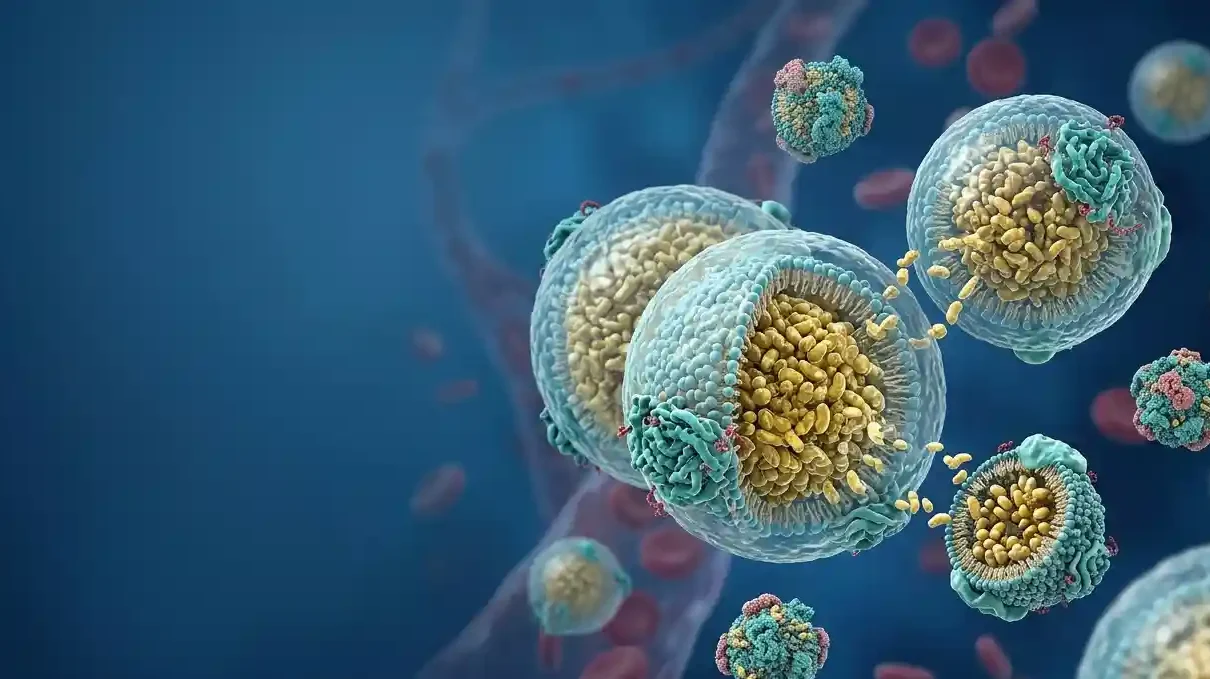
Lipoproteins are complex particles that transport lipids through the aqueous environment of blood and lymph. Each particle contains lipids and specialised proteins, which together create a stable, soluble transport unit.
Without lipoproteins, triglycerides absorbed from food would not reach muscle and fat tissue, and cholesterol synthesised in the liver would not reach cells that need it. Equally, excess cholesterol could not be returned to the liver for processing.
Lipoprotein Structure
Although lipoproteins vary in size and composition, they share a common architecture:
- A hydrophobic core: Contains mainly triglycerides and cholesterol esters. This is the cargo.
- A hydrophilic outer layer: Composed of phospholipids, free (unesterified) cholesterol and proteins. Phospholipids orient with their water-loving heads outward, making the particle soluble in blood.
- Apolipoproteins: Proteins on the surface and within the shell. They provide structural stability, act as ligands that bind to receptors on cells, and regulate enzymes such as lipoprotein lipase.
What Do Lipoproteins Do?
Lipoproteins function as a transport network between the intestine (where dietary fat is absorbed), the liver (the central hub for lipid synthesis and clearance), and peripheral tissues such as muscle and adipose tissue that use or store fatty acids and cholesterol.
The Main Types of Lipoproteins
Chylomicrons
Chylomicrons are the largest and least dense lipoproteins, composed of about 84% triglyceride and less than 2% protein in healthy individuals.
They are assembled in the endoplasmic reticulum of enterocytes in the small intestine after a meal. Their primary role is to transport dietary triglycerides and cholesterol from the intestine via the lymphatic system into the bloodstream, delivering fatty acids to skeletal muscle, adipose tissue and other organs.
Very-Low-Density Lipoproteins (VLDL)
VLDL particles are made in the liver and are triglyceride-rich, though less so than chylomicrons.
Their main function is to transport endogenous triglycerides synthesised in the liver to peripheral tissues for energy use or storage. As triglycerides are removed, VLDL becomes progressively denser, first becoming intermediate-density lipoprotein (IDL) and then LDL.
Low-Density Lipoproteins (LDL)
LDL particles are the primary carriers of cholesterol in circulation. They are formed from the metabolism of VLDL and IDL.
Each LDL particle contains a single apolipoprotein B-100 molecule, which allows uptake by cells via LDL receptors. LDL delivers cholesterol to tissues that require it. When LDL is present in excess, or its clearance is reduced, it can accumulate and contribute to the development of atherosclerosis. Elevated concentrations of LDL cholesterol are therefore associated with increased cardiovascular risk.
High-Density Lipoproteins (HDL)
HDL particles are the smallest and densest, with the highest protein content. They are synthesised by both the liver and intestine.
HDL is involved in reverse cholesterol transport – the process of collecting excess cholesterol from peripheral tissues and other lipoproteins and returning it to the liver for excretion or recycling. HDL also carries enzymes and proteins with anti-inflammatory and antioxidative properties. However, HDL biology is complex, and higher HDL levels do not automatically translate into protection from heart disease.
Lipoproteins Compared
| Lipoprotein | Main role | Main lipid carried | General density |
|---|---|---|---|
| Chylomicrons | Transport dietary lipids from intestine to tissues | Triglycerides | Lowest |
| VLDL | Transport triglycerides made in liver to tissues | Triglycerides | Very low |
| LDL | Deliver cholesterol to peripheral cells | Cholesterol | Low |
| HDL | Collect excess cholesterol for return to liver | Cholesterol and phospholipids | High |
LDL vs HDL: What’s the Difference?
LDL and HDL both transport cholesterol but in opposite directions and with different implications. LDL primarily moves cholesterol from liver to tissues, while HDL helps move cholesterol from tissues back to the liver. LDL carries more cholesterol and less protein; HDL carries more protein and less cholesterol. Higher LDL cholesterol is associated with greater risk of atherosclerotic cardiovascular disease. Higher HDL cholesterol is statistically associated with lower risk in populations, but HDL function matters more than the number alone.
Why Lipoproteins Matter for Heart Health
Atherosclerosis can develop when cholesterol accumulates in artery walls. LDL can deposit cholesterol in the vessel wall, particularly when elevated. HDL’s role in reverse cholesterol transport helps explain why low HDL is often seen alongside higher risk, but trials that raise HDL cholesterol pharmacologically have not consistently reduced risk.
Lipoprotein measurements are therefore used as part of overall risk assessment, not in isolation. If you have concerns about cholesterol, discuss them with a qualified healthcare professional.
Key Takeaways
- Lipids are hydrophobic and require lipoproteins to travel in blood
- A lipoprotein consists of a triglyceride and cholesterol ester core surrounded by phospholipids, free cholesterol and apolipoproteins
- Apolipoproteins provide structure, receptor recognition and enzyme regulation
- Chylomicrons transport dietary fat from the gut; VLDL transports triglycerides from the liver
- LDL delivers cholesterol to tissues; elevated LDL is associated with cardiovascular risk
- HDL participates in reverse cholesterol transport
- Density reflects the ratio of lipid to protein
Conclusion
Lipoproteins are essential transport vehicles that make fat metabolism possible. By packaging triglycerides and cholesterol into soluble particles with specific apolipoproteins, the body can deliver energy, build membranes and balance cholesterol between tissues and the liver.

Dr. Samuel Kemp is a Consultant Physician at the Royal Brompton Hospital with specialist expertise in respiratory medicine, including lung cancer, COPD, and advanced interventional bronchoscopy.