
 By
By Spinal Muscular Atrophy (SMA) has long been a daunting diagnosis. As a leading genetic cause of infant mortality, this neuromuscular condition robs the body of survival motor neuron (SMN) protein, leading to progressive muscle weakness and atrophy. In recent years, the treatment landscape has fundamentally changed with gene therapies and SMN2 splicing modifiers like Spinraza, Evrysdi, and Zolgensma.
Yet a critical problem remained. Even when existing therapies successfully stabilise motor neurons, many patients struggle to regain lost muscle mass. The muscle is there, but it lacks the “go” signal to grow.
Enter Apitegromab. This is not another SMN corrector. Instead, it is a muscle-directed therapy aiming to physically rebuild strength. In this article, we break down how Apitegromab works, the latest clinical trial results, regulatory status with the FDA, and what UK patients need to know about availability and cost.
What Is Apitegromab?
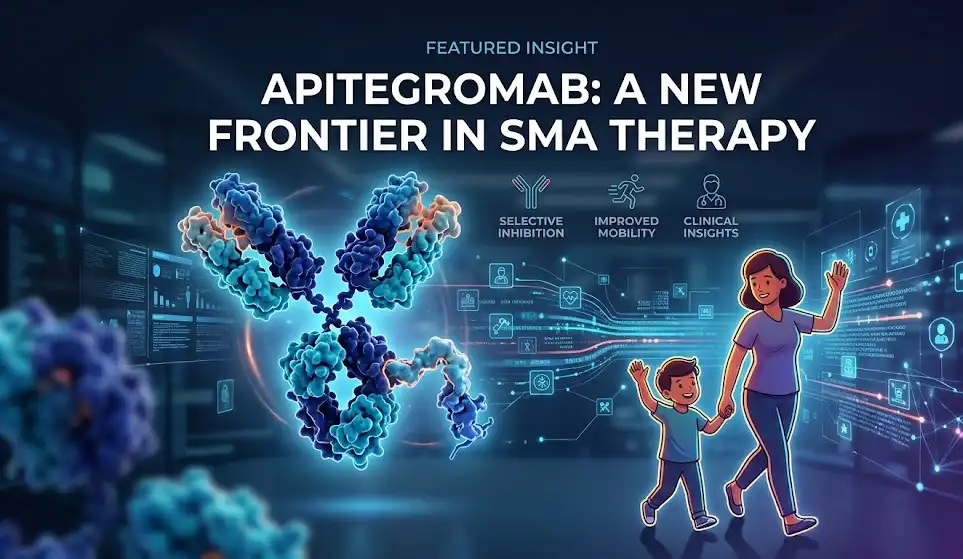
Apitegromab (previously SRK-015) is an investigational, fully human monoclonal antibody designed to treat spinal muscular atrophy. Unlike traditional SMA drugs that target the genetic root cause in the nervous system, Apitegromab acts directly on the muscles.
Developed by Scholar Rock, Apitegromab is specifically intended for patients with Type 2 and Type 3 SMA, used as an add‑on therapy alongside existing SMN‑targeted treatments (nusinersen or risdiplam). As of mid‑2026, Apitegromab is not yet approved but is under priority review by the FDA, with a decision expected by September 2026.
Apitegromab Mechanism of Action
To understand this drug, you need to know myostatin – the body’s natural brake pedal for muscle growth. In SMA, muscles are atrophied and need to grow, but myostatin holds them back.
Apitegromab is selective. It specifically binds to the precursor and latent forms of myostatin, preventing biological activation in skeletal muscle. It essentially releases the brake just enough to promote muscle growth without off‑target toxicity. If SMN correctors save the motor neuron (the wiring), Apitegromab helps the muscle (the engine) rebuild itself.
Apitegromab Clinical Trial Results
TOPAZ Study (Phase 2)
The TOPAZ study enrolled non‑ambulatory patients aged 2–21 with SMA Type 2 or 3 stable on nusinersen. Long‑term data (36 months) showed patients receiving 20 mg/kg maintained improvements: mean change in Hammersmith Functional Motor Scale Expanded (HFMSE) was +4.0 points. Caregivers reported better daily living activities on PEDI‑CAT scale.
SAPPHIRE Study (Phase 3)
This randomised, double‑blind, placebo‑controlled Phase 3 trial (n=188) was published in The Lancet Neurology (2025). The combined dose analysis (10 mg and 20 mg) showed a statistically significant benefit (p=0.019). Patients on Apitegromab saw motor function improvement while those on placebo declined (LS mean –1.2).
Apitegromab FDA Approval Status
Is Apitegromab FDA approved? Not yet. The FDA accepted Scholar Rock’s Biologics License Application (BLA) in May 2026, setting a PDUFA action date of September 30, 2026. Following FDA approval, Scholar Rock plans to seek authorisation from the EMA, and UK availability via MHRA and NICE is likely in late 2027–2028.
Apitegromab Dosage and Administration
- Route: Intravenous (IV) infusion
- Frequency: Once every 4 weeks
- Studied dosage: 20 mg/kg (optimal therapeutic dose based on extension studies)
- Setting: Hospital or specialist infusion centre
Patients continue their existing SMN therapy (oral Evrysdi or injected Spinraza) while adding Apitegromab.
Apitegromab Side Effects
Thanks to its selective mechanism, Apitegromab avoids many toxicities seen with older myostatin inhibitors. In the 36‑month TOPAZ extension, most adverse events were mild to moderate:
- Pyrexia (fever): 48.6%
- Nasopharyngitis (common cold): 45.7%
- COVID‑19 infection: 40.0%
- Vomiting: 40.0%
- Upper respiratory infection: 31.4%
No patients discontinued due to side effects in the SAPPHIRE trial.
Apitegromab Price and Cost Expectations
Official pricing has not been set. The Institute for Clinical and Economic Review (ICER) suggested a health benefit price benchmark of $4,600–$30,200 per year. For context:
- Zolgensma: ~£1.79 million (NHS negotiated)
- Spinraza: ~£75,000/year (year one, then reducing)
- Evrysdi: ~£75,000/year (list price, NHS discounts apply)
Because Apitegromab is an add‑on therapy, pricing will be closely scrutinised by NICE.
Is Apitegromab for Sale?
It remains an investigational drug. You cannot buy it online or get a prescription from a GP. Any website claiming “Apitegromab for sale” is fraudulent or selling unregulated substances. The earliest commercial availability in the US would be October 2026 (post‑PDUFA).
Scholar Rock and the Development of Apitegromab
Scholar Rock (NASDAQ: SRRK) is the biopharmaceutical company behind selective myostatin inhibition. Beyond SMA, they received IND clearance to test Apitegromab in Facioscapulohumeral Muscular Dystrophy (FSHD) and are developing a subcutaneous formulation for easier at‑home administration.
How Apitegromab Compares with Other SMA Treatments
Apitegromab is complementary, not a competitor, to existing SMN therapies. The table below summarises key differences.
| Feature | Apitegromab | Spinraza (Nusinersen) | Evrysdi (Risdiplam) | Zolgensma |
|---|---|---|---|---|
| Target | Muscle (Myostatin) | Nervous System (SMN2) | Nervous System (SMN2) | Nervous System (SMN1 Gene) |
| Mechanism | Selective Myostatin Inhibitor | Antisense Oligonucleotide | SMN2 Splicing Modifier | Gene Therapy |
| Administration | IV infusion (every 4 weeks) | Intrathecal injection | Oral daily | One‑time IV |
| Goal | Increase muscle mass/strength | Preserve motor neurons | Preserve motor neurons | Replace missing gene |
| Status (UK) | Investigational | Approved (NHS) | Approved (NHS) | Approved (NHS) |
Future Outlook for Apitegromab
The neuromuscular community is watching the September 2026 PDUFA date closely. If approved, Apitegromab will become the first muscle‑directed therapy for SMA, potentially helping older children and adults break the “ceiling effect” of SMN therapies, offering modest but real improvements in sitting, standing and daily function.
Frequently Asked Questions
Final thoughts
Apitegromab represents a novel paradigm in SMA care — shifting focus from solely preserving neurons to actively rebuilding muscle. For the UK SMA community, the pathway involves US approval followed by EMA and MHRA reviews. While the wait continues, clinical data supports cautious optimism. Always consult a specialist neuromuscular centre before considering any emerging therapy.

Dr. Samuel Kemp is a Consultant Physician at the Royal Brompton Hospital with specialist expertise in respiratory medicine, including lung cancer, COPD, and advanced interventional bronchoscopy.