
 By
By Nerve flossing — also called nerve gliding — involves gently mobilising the sciatic nerve through controlled movements. By reducing nerve irritation and improving mobility along the nerve pathway, these exercises can help relieve sciatica symptoms such as leg pain, tingling, and numbness when performed regularly and correctly.
Sciatica affects up to 40% of people at some point in their lives. If you’ve ever felt a sharp, shooting pain running from your lower back down through your leg, you’ll know just how debilitating it can be. The sciatic nerve is the longest nerve in the body, and when it becomes compressed or irritated — whether by a herniated disc, tight muscles, or spinal stenosis — the result is that familiar burning, aching, or pins-and-needles sensation.
The good news? You don’t always need to wait for a clinic appointment to start feeling better. Physiotherapy exercises for sciatica, particularly sciatic nerve flossing exercises, are increasingly recommended as a safe, effective way to manage symptoms at home. This guide walks you through five physio-recommended moves, explains how they work, and offers practical guidance on doing them safely.
What Is Nerve Flossing?
Nerve flossing, or nerve gliding, is a technique used in physiotherapy to gently mobilise a nerve through its surrounding tissues. Think of the sciatic nerve like a piece of floss being threaded carefully through tight spaces — the goal is to encourage it to glide freely rather than remain stuck or compressed.
Unlike static stretching, nerve gliding exercises involve dynamic, rhythmic movements that alternate between tensioning and releasing the nerve. This helps reduce inflammation, improve nerve conduction, and restore normal movement along the nerve pathway.
Benefits of Nerve Flossing for Sciatica
When done correctly, nerve flossing for sciatica offers several meaningful benefits:
- Improved nerve mobility — Regular nerve gliding exercises encourage the sciatic nerve to move more freely through surrounding soft tissue
- Reduced pain and tingling — Gentle mobilisation can help calm an irritated nerve, easing that familiar burning or electric sensation
- Better flexibility — Many people with sciatica also experience tight hamstrings and hip muscles; nerve flossing addresses both
- Support alongside physiotherapy — These exercises complement hands-on treatment, helping you maintain progress between appointments
- Safe, at-home management — Most exercises can be performed without equipment, making them accessible for everyday use
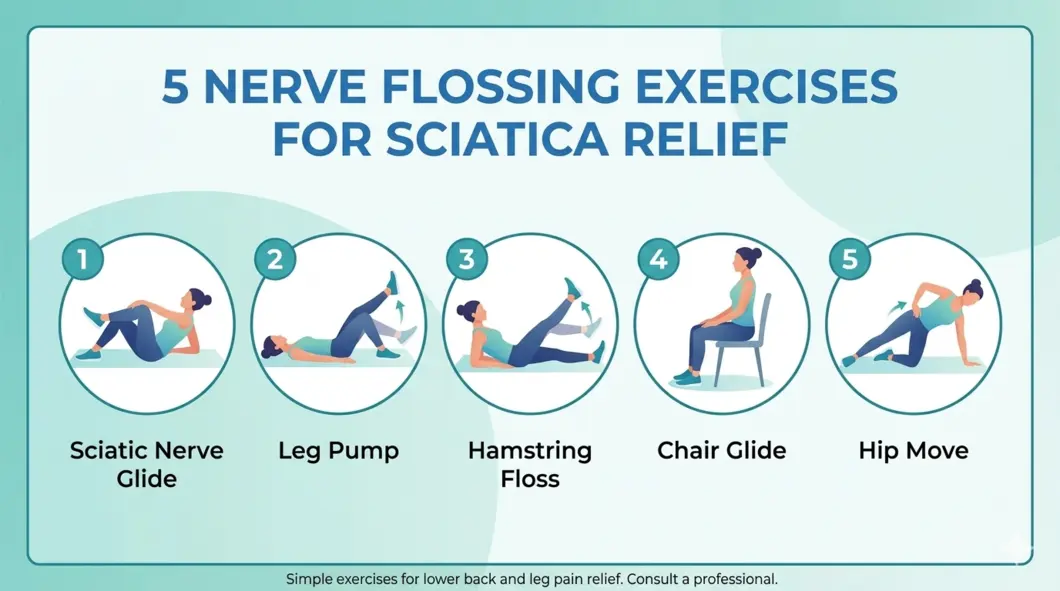
5 Nerve Flossing Exercises for Sciatica Relief
Before starting, find a comfortable, firm surface. Move slowly and never push through sharp or severe pain. These exercises should create a mild, tolerable sensation — not agony.
1. Seated Sciatic Nerve Glide
This is one of the most accessible sciatic nerve exercises at home and a great starting point for beginners.
How to do it:
- Sit upright on the edge of a chair with both feet flat on the floor
- Straighten one leg out in front of you, foot flexed (toes pointing up)
- As you extend the leg, gently tilt your head back
- Slowly bend the knee back down and drop your chin to your chest simultaneously
- Repeat 10–15 times on each side
Form tips: Keep the movement slow and controlled. The alternating head and leg motion is key — this creates the flossing effect along the nerve.
Who should avoid it: Those with severe acute sciatica or recent spinal surgery should seek physiotherapy guidance before attempting this.
2. Lying Sciatic Nerve Floss
This version takes the strain off your spine and is ideal if sitting upright is uncomfortable.
How to do it:
- Lie on your back with both knees bent and feet flat on the floor
- Bring one knee up towards your chest and hold behind the thigh
- Slowly straighten the knee as much as comfortable, then flex your foot (toes towards you)
- Gently lower back to the start position
- Repeat 10–12 times per side
Form tips: Don’t force the leg straight. A gentle, controlled range of motion is more effective than pushing for maximum extension.
Who should avoid it: People with hip replacements should check with their physiotherapist first.
3. Standing Hamstring Nerve Glide
This standing variation also targets the hamstrings, making it useful for those with lower back pain and nerve flossing for sciatica goals.
How to do it:
- Stand tall and place one foot on a low step or chair in front of you
- Keep your back straight and gently lean forward slightly from the hips
- Flex your foot (pull toes up) and slowly straighten the knee
- Hold for 2 seconds, then relax
- Repeat 10 times per side
Form tips: Avoid rounding your lower back. The movement should come from the hip, not the spine.
Who should avoid it: Those with balance issues should perform this near a wall for support.
4. Knee Extension Nerve Glide
A controlled knee extension combined with ankle movement creates an effective nerve gliding exercise that targets the full length of the sciatic nerve.
How to do it:
- Sit upright in a chair with feet flat on the floor
- Slowly straighten one knee to a comfortable height
- At the same time, pull your foot back (dorsiflexion), then point your toes down (plantarflexion) alternately
- Return the foot to the floor and repeat on the other side
- Perform 10–15 repetitions per leg
Form tips: The ankle movement is what drives the nerve flossing here, so keep it rhythmic. Avoid tensing the rest of your body.
Who should avoid it: Skip this one if knee extension consistently reproduces sharp nerve pain below the knee.
5. Slump Stretch Nerve Floss
The slump stretch is a classic physiotherapy technique for sciatic nerve pain. It’s slightly more advanced, so approach it with care.
How to do it:
- Sit upright at the edge of a chair
- Slump your back and drop your chin to your chest
- Extend one leg and flex your foot
- Hold for 2–3 seconds, then release — straighten your back and return the foot to the floor
- Repeat 8–10 times per side
Form tips: This exercise should create a mild stretching sensation, not sharp pain. If symptoms worsen, stop immediately.
Who should avoid it: This is not recommended for those in the acute phase of a disc injury or anyone who has been advised against forward flexion by their physiotherapist.
Safety Tips Before Trying Nerve Flossing
Nerve gliding exercises are generally safe, but a few precautions go a long way:
- Start gently. Begin with the least intense exercises and gradually build up over several days
- Stop if pain intensifies. A mild stretch sensation is expected; sharp, shooting pain is not
- Avoid aggressive tension. Nerve flossing works through gentle mobilisation, not forceful stretching
- Don’t work through numbness. If you experience increasing numbness or weakness, stop and seek advice
- Consult a physiotherapist if you’re unsure which exercises are appropriate for your specific condition
How Often Should You Do Nerve Flossing Exercises?
For most people, performing sciatic nerve flossing exercises once or twice daily is a good starting point. Here’s a simple framework:
- Week 1: 1 session per day, 10 reps per exercise, 2–3 exercises maximum
- Week 2 onwards: Build to 2 sessions per day as tolerated
- Rest days: If you feel more irritated after a session, take a day off before resuming
Consistency matters more than intensity. Short, regular sessions tend to produce better results than longer, infrequent ones.
When to See a Doctor or Physiotherapist
Nerve flossing for lower back pain and sciatica can be highly effective, but it’s not a substitute for professional assessment. Seek urgent medical advice if you experience:
- Sudden, severe pain that doesn’t ease with rest
- Loss of bladder or bowel control (this may indicate cauda equina syndrome, a medical emergency)
- Progressive weakness in the leg or foot
- Significant numbness that spreads or worsens
- Symptoms following a recent injury or accident
A physiotherapist can assess the root cause of your sciatica, confirm whether nerve flossing is appropriate for your situation, and tailor a treatment plan to your needs.
Take Control of Your Sciatica, One Movement at a Time
Sciatic nerve flossing exercises won’t resolve every case of sciatica overnight, but they offer a practical, evidence-informed way to manage symptoms and support recovery. The five exercises outlined here — from the seated nerve glide to the slump stretch — are each designed to gently mobilise the sciatic nerve without placing unnecessary strain on the spine.
Start slowly, listen to your body, and consider working with a physiotherapist to ensure you’re performing each movement correctly. When done consistently and carefully, nerve gliding exercises can make a meaningful difference to daily comfort and mobility.
Frequently Asked Questions
What is nerve flossing for sciatica?
Nerve flossing for sciatica is a physiotherapy technique that involves gently moving the sciatic nerve through its surrounding tissues using controlled exercises. The goal is to reduce nerve irritation, improve mobility, and relieve symptoms such as leg pain, tingling, and numbness.
Do nerve flossing exercises really work?
Research suggests that nerve gliding exercises can be effective in reducing sciatic pain and improving function, particularly when used alongside other physiotherapy treatments. Results vary depending on the underlying cause of sciatica, but many people notice improvement with consistent practice over several weeks.
How often should you do sciatic nerve flossing?
Most physiotherapists recommend performing sciatic nerve flossing exercises once or twice daily. Starting with one session per day and 10 repetitions per exercise is a sensible approach for beginners, gradually increasing frequency as symptoms improve.
Can nerve flossing make sciatica worse?
If performed incorrectly or too aggressively, nerve flossing can temporarily aggravate symptoms. Always work within a tolerable range of sensation, avoid sharp pain, and stop if symptoms worsen. If you’re unsure, consult a physiotherapist before starting.
Is nerve flossing the same as stretching?
No — nerve flossing and stretching are different techniques. Static stretching targets muscles and holds a position to lengthen tissue. Nerve flossing uses dynamic, rhythmic movements to mobilise the nerve itself, alternating between tension and release rather than holding a single position. Follow UKHealthInsight for more tips!

Dr. Samuel Kemp is a Consultant Physician at the Royal Brompton Hospital with specialist expertise in respiratory medicine, including lung cancer, COPD, and advanced interventional bronchoscopy.