
 By
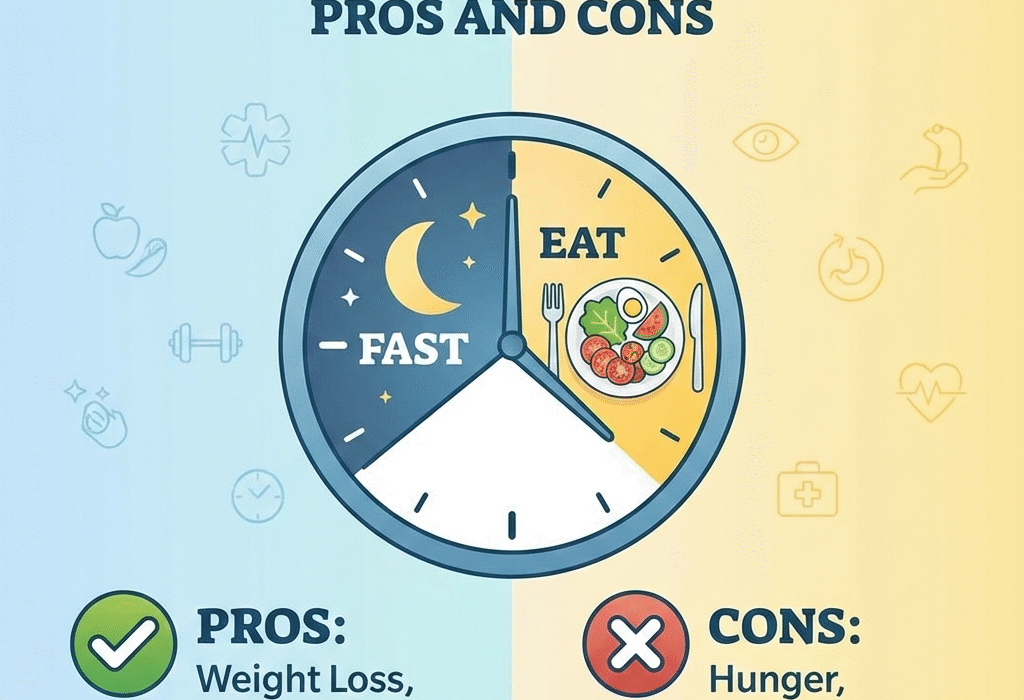
By Intermittent fasting has surged in popularity, but recent 2025 studies reveal a mixed picture on its effectiveness and safety. This guide dives into intermittent fasting pros and cons, weighing short-term wins against emerging long-term concerns like cardiovascular risks. Whether you’re considering it for weight loss or metabolic health, understanding fasting benefits and risks is essential.
Intermittent Fasting Explained: Time-Restricted Eating
Intermittent fasting explained: It’s an eating pattern alternating between fasting periods and normal meals, focusing on when you eat rather than what. Unlike traditional diets, it leverages your body’s natural fasting state to promote fat burning and cellular repair.
Common approaches include daily or weekly restrictions, making it flexible for busy lifestyles. However, 2025 research stresses personalization over one-size-fits-all.
How Intermittent Fasting Works
How intermittent fasting works involves metabolic switches:
- Glycogen depletion (12+ hours): Body burns stored carbs.
- Ketosis (after 12-16 hours): Fat becomes the primary fuel.
- Autophagy: Cells clean damaged components, potentially reducing inflammation.
- Hormonal shifts: Lower insulin, higher growth hormone aids fat loss and muscle retention.
These mimic ancestral patterns but require stable blood sugar to avoid crashes.
Intermittent Fasting Schedule Types
Explore popular intermittent fasting schedule types:
- 16/8: 16-hour fast, 8-hour eating window (e.g., 12 pm-8 pm). Easiest for beginners.
- 5:2: Normal eating 5 days, 500-600 calories on 2 non-consecutive days.
- Eat-Stop-Eat: Full 24-hour fasts 1- 2x weekly.
- Alternate-Day: Calorie restriction every other day.
The 16/8 suits most, per adherence studies.
Intermittent Fasting Pros: Evidence-Based Benefits
Weight Loss and Metabolic Improvements
Trials show a 3-8% body weight drop in 3-12 months, comparable to calorie restriction. It enhances insulin sensitivity, lowers blood pressure, and improves cholesterol without constant tracking.
Simplicity and Convenience
No food logging needed—aligns with schedules or cultural fasts. Some report better focus during fasts.
Potential Longevity Perks
Animal studies suggest autophagy fights aging; human data shows reduced inflammation markers.
Intermittent Fasting Cons: Key Risks and Drawbacks
Cardiovascular Warnings (2025 Research)
A study of 20,000+ adults linked <8-hour windows to 91-135% higher heart disease death risk, especially for diabetics, smokers, and heart patients. Long-term data challenges hype.
Common Side Effects
Hunger, fatigue, irritability, headaches, constipation, and menstrual changes plague many. Adherence wanes over time.
Muscle Loss and Nutrient Issues
Weight loss often includes lean mass; restricted windows risk deficiencies if meals lack balance.
Who Should Avoid Fasting
Pregnant/breastfeeding women, those with eating disorder history, insulin-dependent diabetics, underweight people, the elderly, or those with heart conditions. Consult professionals first.
Fasting vs Calorie Deficit: What the Science Says
Fasting vs calorie deficit: Both create energy gaps for weight loss, with similar 3-8% reductions. 2025 meta-analyses find no superiority—fasting adds structure but not magic. Sustainable calorie control may edge out for adherence.
Beginner Fasting Guide: Safe Implementation
Follow this beginner fasting guide:
- Start with 12/12 (e.g., 8pm-8am), progress slowly.
- Hydrate heavily; black coffee/tea OK.
- Break fasts with nutrient-dense meals (protein, fiber, fats).
- Monitor symptoms; stop if unwell.
- Apps like Zero track progress.
Pair with strength training to preserve muscle.
Frequently Asked Questions (FAQs)
What are the core intermittent fasting pros and cons?
Pros: Delivers 3-8% weight loss in 3-12 months, improves insulin sensitivity for better blood sugar control, and simplifies eating without calorie counting.
Cons: Recent 2025 studies link extreme <8-hour windows to 91% higher cardiovascular death risk; common side effects include fatigue, irritability, headaches, and poor long-term adherence (dropout rates exceed 50%).
How does intermittent fasting work biologically?
After 12+ hours without food, glycogen stores deplete, triggering ketosis, where your body burns fat for fuel. This activates autophagy—cellular “self-cleaning” that removes damaged parts, reduces inflammation, and may promote longevity. Hormonal shifts lower insulin while boosting growth hormone, preserving muscle during fat loss.
What are the best intermittent fasting schedule types for newbies?
The 16/8 method tops the list: fast for 16 hours (overnight is easiest) and eat within an 8-hour window (e.g., noon-8 pm). It’s sustainable, fits busy schedules, and shows the highest adherence in studies. Avoid jumping to 24-hour fasts initially.
Who should avoid fasting?
Those who should avoid fasting include pregnant or breastfeeding women (nutrient demands are high), those with eating disorder history (risks of relapse), insulin-dependent diabetics (hypoglycemia danger), underweight individuals, and anyone with heart disease per 2025 AHA warnings. Always consult a doctor first.
Fasting vs calorie deficit—which wins long-term?
Both yield similar 3-8% weight loss, per 2025 meta-analyses—no clear winner. Fasting offers structure and potential metabolic perks, but struggles with sustainability (higher dropout). Calorie deficit through balanced eating wins for habit-building and muscle preservation. Choose based on lifestyle.
Conclusion
Intermittent fasting pros and cons balance short-term metabolic gains against serious long-term risks like heart issues, per 2025 evidence. It’s not a miracle, but it may suit healthy adults short-term.