
 By
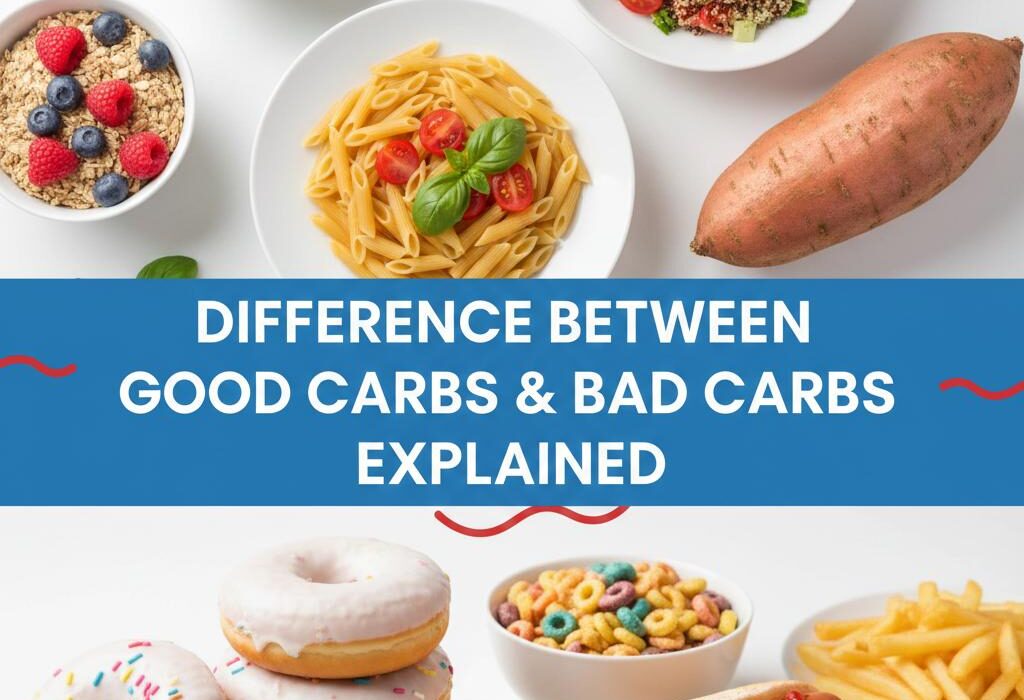
By Carbs fuel your body, but they also spark confusion: are they your friend or a foe? Good carbs vs bad carbs come down to processing, fiber, and glycemic impact, not elimination. 2026 nutrition consensus: Balanced intake (45-65% calories) from quality sources supports energy, gut health, and weight management.
This blog is all about carbs explained for beginners: while glucose powers cells, poor choices can spike blood sugar; however, good ones sustain steadily. This guide compares complex vs simple carbs, lists healthy carbohydrate sources, and shares carbs for weight loss strategies.
Good Carbs vs Bad Carbs: Core Differences
Good vs bad carbs hinges on structure and refinement:
- Good Carbs (Complex): Long-chain starches/fibers digest slowly, stabilizing blood sugar. Nutrient-dense with vitamins, minerals, and antioxidants.
- Bad Carbs (Simple/Refined): Short sugars stripped of fiber/nutrients. Rapid digestion causes spikes/crashes, hunger, and fat storage.
Refined carbs vs whole grains: White bread (refined) GI 70+ vs oats (whole) GI 55—sustained energy wins.
Complex vs Simple Carbs: Digestion Breakdown
Here’s a real-time complex vs simple carbs chemistry breakdown:
Simple: Monosaccharides/disaccharides (glucose, fructose, sucrose). Quick absorption: Candy spikes sugar 30-60 min.
Complex: Polysaccharides (starch, fiber). Slow breakdown: Beans take 2-4 hours.
Fiber (indigestible complex) feeds gut bacteria, producing short-chain fatty acids for 10% energy.
Healthy Carbohydrate Sources: Top Picks
Healthy carbohydrate sources prioritize whole, minimally processed:
- Whole Grains: Oats, quinoa, barley (fiber 5-10g/serving).
- Legumes: Lentils, chickpeas (protein-fiber combo).
- Vegetables: Sweet potatoes, broccoli (low-cal, nutrient-packed).
- Fruits: Berries, apples (fiber tempers natural sugars).
Low GI foods list (GI <55): Chickpeas (28), lentils (32), apples (36), oats (55)—ideal carbs for weight loss.
Carbs for Weight Loss — Smart Choices
Carbs for weight loss emphasize satiety: High-fiber complex carbs fill with fewer calories. Studies show 10g fiber daily aids 1-2kg loss yearly.
Refined carbs vs whole grains swap: Brown rice over white cuts cravings 20%. Portion 1/4 plate carbs + veggies/protein.
Refined Carbs vs Whole Grains: Impact Visualized
| Type | Examples | GI | Effects |
| Refined (Bad) | White bread, soda, chips | 70+ | Spikes/crashes, hunger |
| Whole (Good) | Oats, brown rice, beans | <55 | Steady energy, full |
The low GI foods list prevents insulin resistance.
Carbs Explained for Beginners: Daily Integration in Meals
Carbs explained for beginners: 45-65% calories come from quality sources. Plate or portion method: 1/4 carbs (whole), 1/4 protein, 1/2 veggies.
Good vs bad carbs myth: Not all carbs are equal; quality > quantity. 2026 keto revival overlooks fiber’s role in longevity.
Conclusion
Good carbs vs bad carbs clarified completely: You need to prioritize healthy carbohydrate sources and a low GI foods list for vitality. Complex vs simple carbs guide smarter plates and portions.
This beginner’s guide embraces quality. Follow UKHealthInsight for more health-related info!
FAQs
What are good carbs vs bad carbs?
Good carbs vs bad carbs: Good = complex/fiber-rich (oats, beans, veggies)—slow energy, nutrients. Bad = refined/simple (soda, white bread)—spikes/crashes. Choose whole for health.
What is the difference between simple and complex carbs?
Complex vs simple carbs explained in simple terms: Simple carbs digest fast (sugar rush); complex carbs, on the other hand, digest more slowly (sustained energy via fiber/starch). Complex = whole grains/legumes; simple = candy/juice.
What are examples of good carbs?
Some examples of good carbs are healthy carbohydrate sources: Oats, quinoa, sweet potatoes, lentils, and berries. High-fiber, nutrient-dense foods for steady energy and gut health.
Are carbs bad for weight loss?
No—carbs for weight loss from low GI foods list (beans, oats) promote satiety. Quality > quantity; refined cause gain.

Dr. Samuel Kemp is a Consultant Physician at the Royal Brompton Hospital with specialist expertise in respiratory medicine, including lung cancer, COPD, and advanced interventional bronchoscopy.