
 By
By Introduction
Artificial Intelligence (AI) has evolved tremendously over the last decade, moving from simple rule-based systems to highly advanced generative models. However, the next frontier in AI development is Agentic AI — AI systems that do not just respond to prompts but act autonomously, make decisions, and perform multi-step tasks without continuous human intervention. Unlike traditional AI systems, which function as reactive tools, agentic AI is proactive, goal-oriented, and capable of self-directed planning.
This blog explores what Agentic AI is, why it matters, its use cases, challenges, and its potential impact across industries.
What is Agentic AI?
Agentic AI refers to artificial intelligence systems that have agency — the ability to perceive their environment, make decisions, plan actions, and execute them independently. These systems go beyond simply providing recommendations or responding to user queries; they are autonomous agents capable of pursuing goals, interacting with tools, and adapting to changes in the environment.
Traditional AI systems are reactive: they wait for instructions and follow programmed rules. In contrast, Agentic AI is proactive. It monitors the environment, evaluates potential actions, and takes initiatives to accomplish objectives.
For example, an agentic AI system in customer service could automatically detect an issue with an order, verify stock availability, initiate a refund process, update inventory, and notify the customer — all without human input.
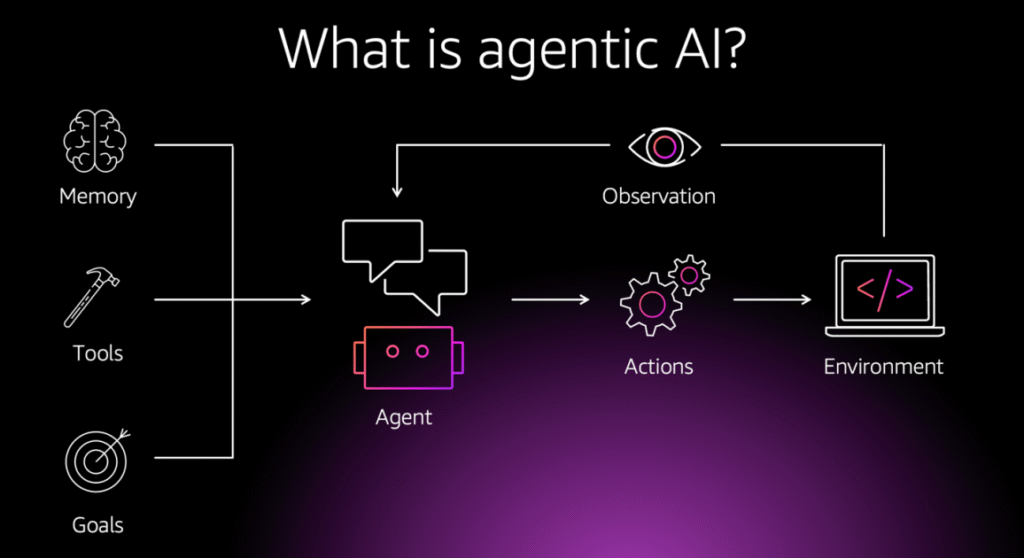
How Does Agentic AI Work?
- Perceive: AI agents gather and process data from various sources, such as sensors, databases and digital interfaces. This involves extracting meaningful features, recognizing objects or identifying relevant entities in the environment.
- Reason: A large language model acts as the orchestrator, or reasoning engine, that understands tasks, generates solutions and coordinates specialized models for specific functions like content creation, visual processing or recommendation systems. This step uses techniques like retrieval-augmented generation (RAG) to access proprietary data sources and deliver accurate, relevant outputs.
Key Features of Agentic AI
The system can set sub-goals, decide priorities, and determine how to act to achieve objectives
Agentic AI doesn’t just react; it executes multi-step plans, interacts with multiple tools, and completes tasks end-to-end.
These systems continuously learn from feedback and past outcomes to improve performance.